You can access the distribution details by navigating to My Print Books(POD) > Distribution
Add a Review
Type:
Print Book
Genre: Politics & Society, Philosophy
Language: English
Price:
₹404
+ shipping
Description
The social world we live in is rarely seen as a 'constructed reality'. Law, education, work, family, state, and economy present themselves as natural, inevitable, and unquestionable. Rather than appearing as products of historical processes or power relations, these structures come to be seen as part of “normal life.” Over time, they become so familiar that their presence fades from view—and this invisibility becomes their greatest strength.
This conditioning begins in childhood. Individuals are taught how to think, how to behave, how to follow discipline, how to respect authority, and how to define success. In the name of education, discipline, and progress, a framework is internalized in which adjustment is understood as maturity and obedience as responsibility. Yet a basic question is rarely asked: "in whose interest do these structures ultimately operate, and at whose cost?"
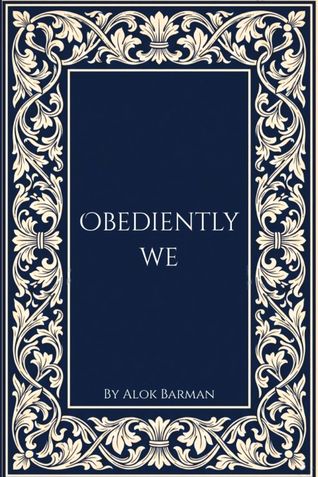
'Obediently We' is neither a manifesto nor a guide to reform. It does not prescribe an ideology, nor does it claim to offer solutions. It is an observation. This book examines the invisible structures that organize modern society while remaining largely unquestioned. Obedience is not treated here as an individual failure or moral weakness, but as a "systemic condition"—produced through social, economic, political, and cultural arrangements.
Most people do not obey because they lack the capacity to resist, but because obedience is tied to survival. Employment, income, housing, education, legality, and social legitimacy are all linked to compliance. To go against the system is not merely to disagree; it often entails the risk of instability, exclusion, and insecurity. In this context, obedience appears less as a conscious choice and more as an imposed condition.
At the center of this book lies a simple yet unsettling question:
"Do human beings truly live with free will, or do they exist within frameworks in which most of their choices have already been structured?"
Modern societies celebrate freedom, choice, and individuality as core values. Individuals are told that they are the architects of their own lives. Yet closer examination reveals that choices exist only within a limited, pre-approved range. The system defines the options; the individual merely selects among them. In this way, choice becomes a tool—creating the illusion of freedom while rendering the structure itself invisible.
Through this process, responsibility is shifted onto the individual. Failure appears personal rather than structural. Success is seen as the result of merit rather than conditioning. The system conceals its own limitations and assigns individuals responsibility for their position within it. The narrative of freedom masks power.
'Obediently We' attempts to show how power operates without constant coercion. Modern systems of control rely less on direct violence and more on fear of economic insecurity, dependence, social approval, moral conditioning, and the promise of stability. Over time, individuals begin to self-regulate—adjusting their speech, ambitions, and expectations in accordance with the system. When obedience becomes habitual, authority becomes invisible.
The focus of this book is not on individuals or institutions, but on "structures"—the patterns that shape thought, behavior, and meaning, and then present themselves as “common sense.” This book questions the assumed inevitability of those structures.
Importantly, 'Obediently We' offers no solutions. Because offering solutions often creates a new system—a new ideology, a new form of obedience. The task of this book is not to prescribe, but to expose. It places a mirror before the reader and leaves interpretation in their hands.
About the Author
Book Details
ISBN: 9789356790568
Publisher: Eleven Fifty Publishing
Number of Pages: 223
Dimensions: 6"x9"
Interior Pages: B&W
Binding:
Paperback (Perfect Binding)
Availability:
In Stock (Print on Demand)
Ratings & Reviews
Obediently We
Review This Book
Write your thoughts about this book.

Currently there are no reviews available for this book.
Be the first one to write a review for the book Obediently We.
Other Books in Politics & Society, Philosophy

Avinandan Das

Pradip Kumar Ray

Bala Sankar

Chris Collins