You can access the distribution details by navigating to My Print Books(POD) > Distribution
Add a Review
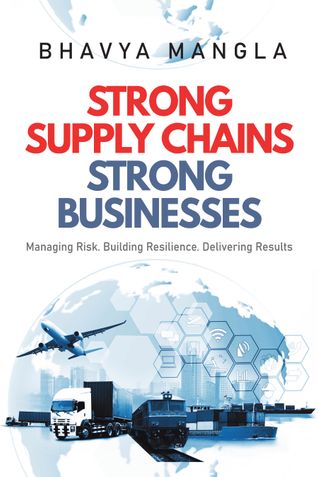
Strong Supply Chains, Strong Businesses
Managing Risk. Building Resilience. Delivering Results
Bhavya ManglaDescription
The COVID-19 pandemic taught the world one clear lesson: a strong supply chain can save lives, and a weak one can cost them. The global vaccine rollout proved this. Getting billions of vaccines to people safely and on time required careful planning, proper storage, and dependable transportation. Where these systems worked well, vaccines reached people quickly. Where they failed, doses were wasted, shortages occurred, and lives were affected. The supply chain was not just a support function. It was the difference between success and failure.
But you don't need a crisis to feel the impact of a poor supply chain. Every day, in every industry, manufacturing, healthcare, services, tourism, and infrastructure, businesses depend on their supply chains to keep things running. When the supply chain works, costs stay low, customers are happy, and business grows. When it doesn't, even the best product and the best team cannot make up for it.
So, what makes a supply chain strong? It starts with choosing the right partners. When you work with reliable and capable suppliers, many problems are avoided before they even begin. But choosing them is just the start. You also need to regularly check how they are performing and work with them to keep improving. A good supplier relationship is built over time, with trust and effort on both sides.
Clear communication is equally important. Businesses that stayed in regular contact with their suppliers and customers during difficult times were able to handle problems far better than those that didn't. It is also easy to forget that suppliers have expectations too. When suppliers are unhappy, the impact shows up in late deliveries, poor quality, and less cooperation when you need help most.
Inside the business, managing inventory and storage well helps reduce waste and keep costs under control. Holding too much stock wastes money. Holding too little causes delays. Getting this balance right requires good systems and consistent attention. And after all of this, the final test is simple: Does the product reach the customer on time? That is why logistics and transportation matter so much. They are the last step, and often the most visible one.
You may already be doing many things right. But if the results are still not where you want them to be, there is a gap somewhere. This book is designed to help you find it. Use it as a practical guide to identify where things are going wrong and to discover better ways of working that can help you reach your goals.
The chapters ahead cover all the key areas of supply chain management: Partner selection, performance, communication, inventory, logistics, and more. Work on these areas, and you will build a supply chain that is more efficient, more reliable, and better prepared for future challenges.
The battlefield is real. This book helps you win.
About the Author
Book Details
Publisher: Self-Publishing
Number of Pages: 143
Dimensions: 6.00"x9.00"
Interior Pages: B&W
Binding:
Paperback (Perfect Binding)
Availability:
In Stock (Print on Demand)
Ratings & Reviews
Strong Supply Chains, Strong Businesses
Review This Book
Write your thoughts about this book.

Currently there are no reviews available for this book.
Be the first one to write a review for the book Strong Supply Chains, Strong Businesses.
Other Books in Business & Economics

Buzz Leaps

Anurag Mathur
Kaloian Kirilov, Professor Sanjay rout

EFY Enterprises Pvt Ltd