You can access the distribution details by navigating to My Print Books(POD) > Distribution
Add a Review
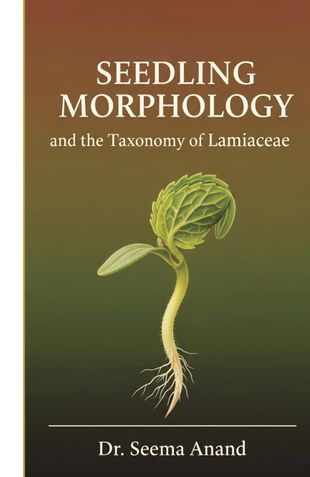
Description
The world of plants is an intricate tapestry of species, each contributing to the diverse ecosystem we rely on. To understand plants deeply, one must look beyond the mature, fully developed organisms and turn their attention to the early stages of plant life: the seedling. Seedlings are the building blocks of plant growth, offering crucial insights into the taxonomy, genetics, and evolutionary history of plants. In Exploring Seedling Morphology and Plant Taxonomy, we embark on a detailed exploration of the seedling phase, particularly focusing on the Lamiaceae family—a group of plants that have significant ecological, medicinal, and economic value.
Seedling morphology, which refers to the study of the form and structure of plants in their early developmental stages, has long been a cornerstone of botanical science. In particular, the study of seedling morphology holds immense potential for understanding plant classification, identification, and evolutionary relationships. Often, the juvenile stages of plants, including their seeds and seedlings, possess features that are not only distinct but also highly conserved, making them a reliable source of taxonomic information. Despite this, the importance of seedling morphology in plant taxonomy has often been overshadowed by the more prominent focus on mature plant features such as flowers and leaves. This book aims to rectify this gap in literature by shedding light on the value of seedling morphology and demonstrating how early plant structures can significantly enhance taxonomic studies.
The Lamiaceae family, commonly known as the mint family, is particularly well-suited for such a study. Comprising a diverse range of species, from herbs to shrubs, the Lamiaceae family is home to plants with a wide array of ecological roles, from essential oil production to medicinal uses. Notable genera such as Mentha, Lavandula, Ocimum, and Salvia are just a few examples of the economic and cultural importance of this family. However, despite their widespread significance, the taxonomy of Lamiaceae has often been debated, and the juvenile stages of these plants are frequently overlooked in the broader understanding of their classification.
This book takes a novel approach by focusing on the seedling stage within Lamiaceae species. By documenting and analyzing the morphological traits of seedlings, this work aims to contribute to a deeper understanding of the Lamiaceae family’s taxonomy. The importance of this study lies not only in its academic contribution but also in its practical application. In an era where biodiversity is under threat due to habitat destruction, climate change, and urbanization, understanding the early stages of plant life is crucial for conservation efforts. Seedling characteristics can serve as a vital tool for identifying and conserving plant species, some of which may be endangered or at risk of extinction.
The book is organized into several chapters that explore different aspects of seedling morphology. The first chapter provides an overview of the significance of seedling morphology in plant taxonomy, explaining how seedling features are used to distinguish between species and genera. The second chapter discusses the advances in seedling morphology research, highlighting the contributions of various scientists and the evolving methodologies that have shaped our understanding of this field. The third chapter delves into the seedling morphology of Lamiaceae species, with detailed observations and analyses of their growth patterns. Finally, the book discusses the implications of seedling morphology in the broader field of plant systematics, providing insights into how juvenile characteristics can inform classification and phylogenetic relationships.
In conclusion, Exploring Seedling Morphology and Plant Taxonomy presents a comprehensive and systematic study of the importance of seedling morphology in understanding the taxonomy of the Lamiaceae family. This work will not only serve as a valuable resource for botanists and researchers but will also inspire further investigations into the rich and often unexplored world of plant development. The future of plant taxonomy depends on the integration of juvenile characteristics into taxonomic frameworks, and this book hopes to contribute meaningfully to that goal.
About the Author
Book Details
ISBN: 9789349567306
Publisher: Bharat Publication House
Number of Pages: 165
Dimensions: 5.5"x8.5"
Interior Pages: B&W
Binding:
Hard Cover (Case Binding)
Availability:
In Stock (Print on Demand)
Ratings & Reviews
Seedling Morphology and the Taxonomy of Lamiaceae
Review This Book
Write your thoughts about this book.

Currently there are no reviews available for this book.
Be the first one to write a review for the book Seedling Morphology and the Taxonomy of Lamiaceae.
Other Books in Science & Technology

Arjun Pitcher

Dr Samir Kumar Lenka, Dr. Koushik Mandal, Dr. ...

Aniruddh Kumar Sharma
Dr. Sailaja Satharla, Dr. Indra Kumar Kasi