You can access the distribution details by navigating to My pre-printed books > Distribution
Add a Review
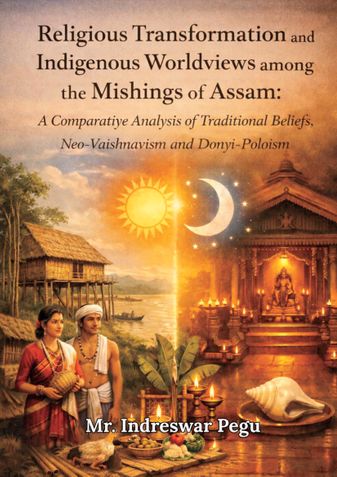
Religious Transformation and Indigenous Worldviews among the Mishings of Assam: A Comparative Analysis of Traditional Beliefs, Neo-Vaishnavism and Donyi-Poloism (eBook)
Type:
e-book
Genre: Education & Language
Language: English
Price:
₹0
Description
The religious life of the Mishing community of Assam represents a complex field of
continuity, adaptation, and transformation shaped by indigenous cosmology, regional Hindu
reform movements, and modern ethnic revivalism. This paper examines the transformation of
Mishing religion through a comparative analysis of three coexisting religious orientations:
traditional animistic–ancestral belief systems, neo-Vaishnavism, and Do:nyi-Po:loism.
Drawing upon ethnographic literature, oral traditions, and sociological theory, the paper
analyses changes in cosmology, ritual practice, ethical orientation, institutional authority, and
identity politics. It argues that religious change among the Mishings does not follow a linear
trajectory of Sanskritisation or secularisation, but rather reflects selective appropriation and
plural religious belonging. Neo-Vaishnavism facilitated social integration into Assamese
society, while Do:nyi-Po:loism emerged as a modern indigenous response aimed at cultural
revitalisation and ecological ethics. The study contributes to broader debates on indigenous
modernity, religious pluralism, and the politics of identity in Northeast India.
About the Author
Book Details
ISBN: 9789347142772
Publisher: AgniLeaf
Number of Pages: 11
Availability:
Available for Download (e-book)
Ratings & Reviews
Religious Transformation and Indigenous Worldviews among the Mishings of Assam: A Comparative Analysis of Traditional Beliefs, Neo-Vaishnavism and Donyi-Poloism
Review This Book
Write your thoughts about this book.

Currently there are no reviews available for this book.
Be the first one to write a review for the book Religious Transformation and Indigenous Worldviews among the Mishings of Assam: A Comparative Analysis of Traditional Beliefs, Neo-Vaishnavism and Donyi-Poloism.
Other Books in Education & Language
Professor, Dr Manish Shrivastava, Prof Dr Ghanshyam Patidar, ...

Jialal Koundal
Dr. Abhilasha Gautam
GN RAO