You can access the distribution details by navigating to My pre-printed books > Distribution
Add a Review
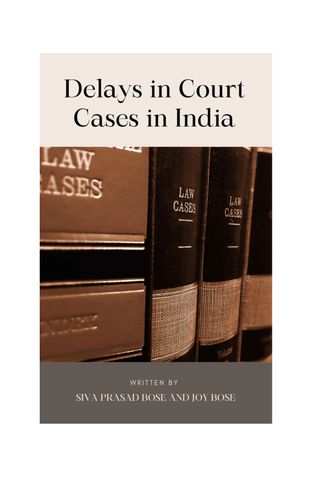
Delays in Court Cases in India (eBook)
Type:
e-book
Genre: Law
Language: English
Price:
₹15
(Immediate Access on Full Payment)
Description
India’s courts are among the busiest in the world, yet justice often moves painfully slowly. Cases remain unresolved for years, sometimes decades, leaving ordinary citizens trapped in uncertainty, stress and rising legal costs. For many, the court system feels less like a path to justice and more like a long, unavoidable struggle.
In this book, we explain why delays happen and what can be done to fix them. The book looks closely at the major causes of pendency: shortage of judges, complex procedures, slow investigations, misuse of legal provisions, and intentional delays by litigants. It examines why property disputes take so long, why undertrials languish in jail, and why family cases often stretch across a large part of a person’s life.
The book also explores the role of technology in modernising justice. From digital courts and virtual hearings to AI-assisted research, case summarisation and early detection of frivolous filings, new tools are beginning to change how courts work. These developments, along with recent reforms such as the Mediation Act and the overhaul of criminal laws, show that improvement is possible.
Clear, concise, and based on real data and reports, this guide offers practical recommendations for faster, fairer courts. It is written for citizens, students, policymakers, and anyone who wants to understand how India’s justice system can be made more efficient and accessible.
About the Authors
Book Details
Publisher: Self Published
Number of Pages: 84
Availability:
Available for Download (e-book)
Ratings & Reviews
Delays in Court Cases in India
Review This Book
Write your thoughts about this book.

Currently there are no reviews available for this book.
Be the first one to write a review for the book Delays in Court Cases in India.
Other Books in Law

Prashant S Jadhav

Adv Cherry Kushwaha

Justice Peter Mohan Peiris

Tarun Dutt