You can access the distribution details by navigating to My pre-printed books > Distribution
Description
Yoga isn't just "stretching" for the ASD brain; it is a neurological "reset." Scientific research highlights three primary physiological impacts:
Vagus Nerve Stimulation: Many individuals with ASD live in a state of "fight or flight" (sympathetic nervous system dominance). Yoga stimulates the vagus nerve, activating the parasympathetic nervous system to reduce cortisol and promote a "rest and digest" state.
Proprioceptive & Vestibular Input: Autism often involves sensory seeking or avoidance. Yoga poses (asanas) provide deep pressure and balance challenges that help the brain better understand where the body is in space.
Mirror Neuron System: Group yoga or imitation-based poses may help stimulate mirror neurons, which are often underactive in ASD, potentially aiding in social imitation and empathy.
Yoga for the ASD Brain
Phase 1: Self-Regulation (The "Calm" Phase)
The primary goal is to move the student from a state of hyper-arousal to a state of readiness.
Pranayama (Breathwork): Simple techniques like "Bee Breath" (Bhramari) or "Belly Breathing" provide immediate feedback to the nervous system, reducing anxiety and meltdowns.
Scientific Link: Studies show that rhythmic breathing increases Heart Rate Variability (HRV), a key marker of emotional resilience.
Phase 2: Sensory Integration (The "Body" Phase)
This phase uses physical postures to organize the sensory system.
Tactile & Heavy Work: Poses like Plank or Downward Dog provide weight-bearing input to the joints, which is calming for those with sensory processing disorders.
Balance: Poses like Tree Pose require focus and core engagement, which strengthens the cerebellum—the part of the brain often linked to motor delays in autism.
Phase 3: Social & Emotional Literacy (The "Connection" Phase)
Yoga therapy often transitions from individual movement to "partner poses" or group synchrony.
Joint Attention: Following an instructor’s movement builds "joint attention," a foundational social skill that involves sharing an experience with another person.
Book Details
Number of Pages: 106
Availability:
Available for Download (e-book)
Ratings & Reviews
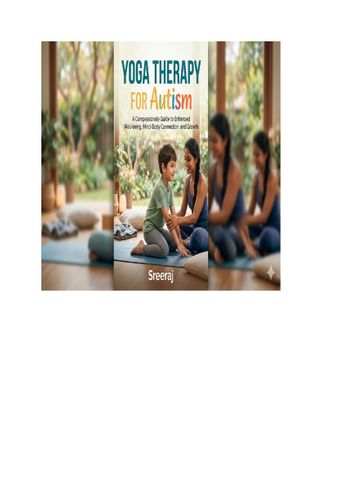
Yoga Therapy for Autism
Review This Book
Write your thoughts about this book.

Currently there are no reviews available for this book.
Be the first one to write a review for the book Yoga Therapy for Autism.
Other Books in Parenting & Families

Hridayaa Parihar

Avanti Kardile


C. P. Kumar