You can access the distribution details by navigating to My Print Books(POD) > Distribution
Add a Review
Description
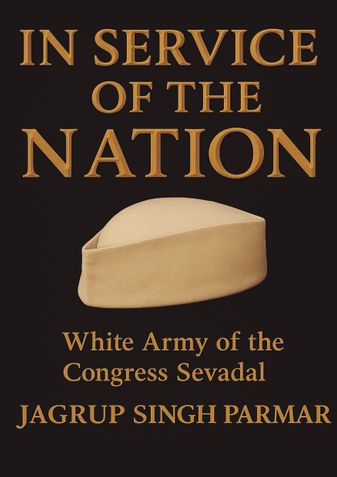
The book “IN SERVICE OF THE NATION: White Army of the Congress Sevadal” by JAGRUP SINGH PARMAR is summarised below:
The organisation the British feared--Congress Sevadal--established in 1923, has been a pivotal organization in India's political and civic landscape. Founded during the Kakinada Session of the Indian National Congress, it aimed to create a disciplined volunteer force for the independence movement. Dr. Narayan Subbarao Hardikar, inspired by Gandhian principles, envisioned a non-violent organization promoting civic discipline and mobilizing citizens for the national cause. The Sevadal quickly became integral to the Congress, training volunteers from diverse backgrounds and fostering collective discipline and service. The active participation of women and marginalized communities transformed the Sevadal into a grassroots movement for social change and national awakening.
During the Civil Disobedience Movement, the Sevadal played a vital role in mobilizing support and organizing protests. Volunteers facilitated communication, provided logistical support, and acted as protective shields for Congress leaders during demonstrations. Their disciplined training enabled effective crowd management and order maintenance during turbulent times, making the Sevadal a key player in the struggle against colonial rule. Sevadal members were also involved in promoting khadi, organizing community kitchens, and conducting educational activities, fostering a sense of national identity and civic responsibility among the populace.
After India gained independence, the Sevadal shifted its focus toward nation-building efforts. The organization addressed social issues, conducted literacy campaigns, and promoted public health initiatives. Sevadal volunteers became instrumental in the reconstruction of post-colonial India, emphasizing civic duty and community service. During the Indo-China War and subsequent conflicts, the Sevadal mobilized to support the nation through blood donation drives, civilian evacuation efforts, and public morale-boosting activities.
The Emergency period (1975-77) presented significant challenges for the Sevadal, as it had to navigate the complexities of loyalty to the ruling party while upholding its foundational values of service and democracy. After the Emergency, the Sevadal focused on rebuilding trust and re-establishing its relevance in a changing political landscape marked by communal tensions and economic liberalization. Despite the rise of communal politics and neoliberal economic policies in the 1980s and 1990s, the Sevadal continued to serve communities, particularly in rural areas, through health campaigns and educational initiatives.
In the early 2000s, efforts were made to revitalize the Congress Sevadal, focusing on reconnecting with its grassroots legacy. Training camps were reintroduced, emphasizing constitutional values, civic duty, and communal harmony. The rise of majoritarian politics in 2014 posed new challenges, but the Sevadal adapted by using social media and emphasizing digital literacy. The Bharat Jodo Yatra became a pivotal moment for the Sevadal, allowing it to mobilize and engage with communities across India. The Sevadal's digital strategies evolved, utilizing social media to counter misinformation and promote civic values.
The Congress Sevadal's journey reflects India's broader struggles and transformations. Its future relevance depends on its commitment to civic education and grassroots engagement, ensuring that it continues to play a significant role in shaping India's political and civic landscape.
About the Author
Book Details
ISBN: 9789354692673
Publisher: JAGRUP SINGH PARMAR
Number of Pages: 330
Dimensions: A5
Interior Pages: B&W
Binding:
Paperback (Perfect Binding)
Availability:
In Stock (Print on Demand)
Ratings & Reviews
IN SERVICE OF THE NATION
Review This Book
Write your thoughts about this book.

Currently there are no reviews available for this book.
Be the first one to write a review for the book IN SERVICE OF THE NATION.
Other Books in Politics & Society

Yagnesh Suthar

Dadabhai Naoroji

Manas Jena

George Bernard Shaw