You can access the distribution details by navigating to My Print Books(POD) > Distribution
Add a Review

UNO Smart Play: Simple Ways to Win More ...
Haruchi
History of Indian Education
Dr. Dinachandra Singh Chingakham
MPSC परीक्षा गाइड
Amol Mahajan
Ganapati Atharvashirsha
Ashwini Kumar Aggarwal
 Free Shipping
Description
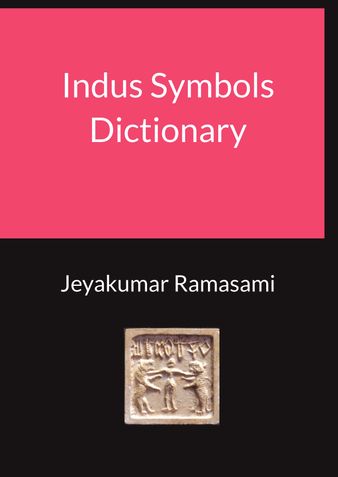
There have been numerous attempts to decipher the Indus script over the past century, but none have succeeded. Why? Because the context of these archaeological sites has been misunderstood. Indus excavation sites have been wrongly classified as metropolises when, in fact, they were necropolises. This foundational misinterpretation has led to flawed analyses of artefacts and structures. For more information, refer to the article "Necropolis Theory on IVC."
This book offers a fresh perspective, asserting that the Indus script follows the writing method of Egyptian hieroglyphics, thereby removing the dependency on bilingual inscriptions like the Rosetta Stone. This breakthrough enables the use of Egyptian hieroglyphs as a comparative reference.
As for the language, the Indus script reflects the influence of Sanskrit, Sumerian elements, and Egyptian hieroglyphics. The Egyptian influence represents what the author terms the “Dravidian component.” It is likely that priests and scribes from Egypt, Sumer, and Vedic India collaboratively contributed to the evolution of the Indus script. The symbols of the Indus Valley indicate a composite culture from 3,500 years ago — a fusion of three great civilizations — misrepresented today by divisive labels of Aryan and Dravidian legacies.
About the Author
Book Details
ISBN: 9798895415313
Publisher: Self Published
Number of Pages: 349
Dimensions: A4
Interior Pages: B&W
Binding:
Paperback (Perfect Binding)
Availability:
In Stock (Print on Demand)
Ratings & Reviews
Indus Symbols Dictionary
Review This Book
Write your thoughts about this book.
Currently there are no reviews available for this book.
Be the first one to write a review for the book Indus Symbols Dictionary.
Other Books in Education & Language
Haruchi
Dr. Dinachandra Singh Chingakham
Amol Mahajan
Ashwini Kumar Aggarwal