You can access the distribution details by navigating to My Print Books(POD) > Distribution
Add a Review
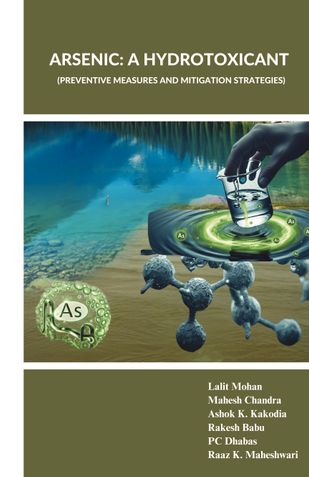
Arsenic: A Hydrotoxicant (Preventive Measures and Mitigation Strategies)
A Hydrotoxicant (Preventive Measures and Mitigation Strategies)
Lalit Mohan, Mahesh Chandra, Ashok K. Kakodia, Rakesh Babu, Prakash Chandra Dhabas, Raaz K. MaheshwariType:
Print Book
Genre: Social Science, Science & Technology
Language: English
Price:
₹1,550
+ shipping
Description
Arsenic contamination has emerged as one of the most critical environmental and public health challenges of the modern era. Its presence in groundwater, soil, food chains, and industrial ecosystems poses severe toxicological risks, particularly in regions where groundwater extraction is high and regulatory oversight is limited. As a potent hydrotoxicant, arsenic affects nearly every major biological system in the human body—including the skin, liver, kidneys, cardiovascular system, and nervous system—leading to both acute and chronic health consequences.
This book provides a comprehensive and multidisciplinary exploration of arsenic exposure, toxicology, clinical manifestations, biochemical mechanisms, and sustainable mitigation strategies. Beginning with the historical and scientific background of arsenic, the chapters delve into the pathways of human exposure, the physiology of arsenic metabolism, and the molecular disruptions caused by inorganic arsenic forms. Additional sections highlight clinical diagnosis, dermatological indicators, carcinogenic outcomes, and population-specific vulnerabilities supported by epidemiological evidence.
Beyond understanding toxicity, the book emphasizes prevention, technological solutions, and community-level interventions aimed at reducing arsenic exposure. Special attention is given to water purification methods, public health frameworks, and long-term
monitoring systems are essential for managing arsenicosis in high-risk regions.
By integrating scientific insight, field-based observations, and research-driven strategies, this book aims to serve as an authoritative resource for students, researchers, medical practitioners, policymakers, and environmental health professionals seeking an in-depth understanding of arsenic as a global hazard and the actionable solutions required to combat it.
About the Authors
Book Details
ISBN: 9789349567313
Publisher: Bharat Publication House
Number of Pages: 263
Dimensions: 5.5"x8.5"
Interior Pages: B&W
Binding:
Hard Cover (Case Binding)
Availability:
In Stock (Print on Demand)
Ratings & Reviews
Arsenic: A Hydrotoxicant (Preventive Measures and Mitigation Strategies)
Review This Book
Write your thoughts about this book.

Currently there are no reviews available for this book.
Be the first one to write a review for the book Arsenic: A Hydrotoxicant (Preventive Measures and Mitigation Strategies).
Other Books in Social Science, Science & Technology
Dr. Vikram R. Kakulte, Smt. Trupti D. Kakulte, ...

Shreenivas Joshi

Agastya Barman

Saurabh Upadhyay