You can access the distribution details by navigating to My Print Books(POD) > Distribution
(1 Review)
Secrets of Long Life
Seyed E.zamani
Tumours of Larynx
Dr Sangeeta Aggarwal
Anti-Aging : Stop That Ticking Clock
Malini White
તંદુરસ્ત જીવનની ચાવીઓ
પ્રો.રીધમ એસ. વાગડિયા
Type:
Print Book
Genre: Medicine & Science, Diet & Health
Language: English
Price:
₹730
This book ships within India only.
 Free Shipping
Description
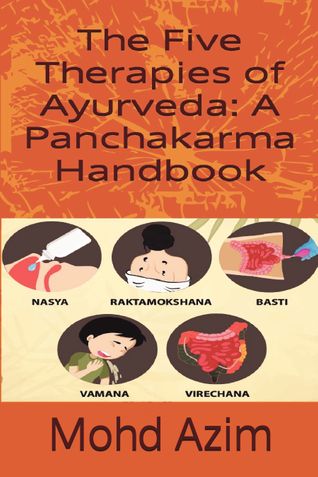
The Five Therapies of Ayurveda: A Panchakarma Handbook is a complete and practical guide to understanding, learning, and applying the classical five detoxification therapies of Ayurveda—Vamana, Virechana, Basti, Nasya, and Raktamokshana.
Rooted in the teachings of the Charaka Samhita, Sushruta Samhita, and Ashtanga Hridaya, this book delivers a structured, evidence-informed explanation of each therapy, integrating classical knowledge with modern clinical practices. From historical background to mechanism of action, indications, contraindications, medicated oils and herbs, formulations, procedure protocols, and post-therapy care, the book covers it all in a step-by-step, reader-friendly manner.
With detailed chapters on Basti and Nasya—including visuals, charts, and modern research correlations—this handbook fills the gap between tradition and practice. It provides clarity to students, precision to practitioners, and insight to educators. It also highlights the pharmacological actions of Ayurvedic preparations, neurophysiological effects of Nasya, and gut-brain cleansing implications of Basti.
This is not just a theoretical book—it is a field-tested manual built on clinical experience, academic research, and didactic clarity. It empowers the reader to approach Panchakarma not only as a detox method but as a life science that supports healing, rejuvenation, and prevention of disease.
Whether you are a BAMS student, an Ayurvedic postgraduate, a Panchakarma therapist, a clinical researcher, or a health-conscious reader seeking natural detox pathways, this book offers profound value.
About the Author
Book Details
ISBN: 9798895415429
Publisher: Independent Publishing
Number of Pages: 156
Dimensions: 6.00"x9.00"
Interior Pages: B&W
Binding:
Paperback (Perfect Binding)
Availability:
In Stock (Print on Demand)
Ratings & Reviews
The Five Therapies of Ayurveda: A Panchakarma Handbook
Review This Book
Write your thoughts about this book.
Other Books in Medicine & Science, Diet & Health
Seyed E.zamani
Dr Sangeeta Aggarwal

Malini White
પ્રો.રીધમ એસ. વાગડિયા
An Excellent and Practical Guide to Panchakarma
The Five Therapies of Ayurveda is a must-read for anyone interested in the deep cleansing and rejuvenating power of Panchakarma. This handbook beautifully explains the philosophy, purpose, and practical execution of each of the five therapies with clarity and depth.
The author presents complex Ayurvedic principles in a reader-friendly way, making the book accessible for beginners while still offering valuable insights for seasoned practitioners. The inclusion of dietary guidelines, preparatory procedures, and post-therapy care makes it a comprehensive manual for safe and effective practice.
It’s an informative, well-organized, and inspiring book that bridges traditional wisdom with modern wellness needs. Highly recommended for students, therapists, and anyone seeking natural ways to restore balance and vitality!