You can access the distribution details by navigating to My Print Books(POD) > Distribution
Add a Review
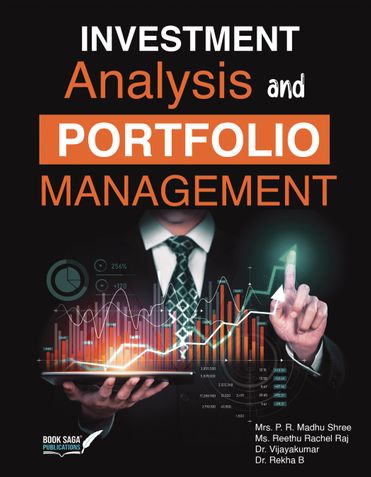
Investment Analysis and Portfolio Management
Mrs. P. R. Madhu Shree, Ms. Reethu Rachel Raj, Dr. Vijayakumar, Dr. Rekha B
Description
Most of the investors spend and earn money throughout their life by investing in securities. Rarely, investor’s current money income exactly balances with their consumption desires. Sometimes, investors may have more money than they want to spend and at other times, they may want to purchase more than they can afford. These imbalances will lead investors either to borrow or to save to maximize the long-run benefits from their income. Investment is an activity that is undertaken by those who have savings. Savings can be defined as the excess of income over expenditure. However, all savers need not be investors. For example, an individual who sets aside some money in a box for a birthday present is a saver, but cannot be considered an investor. On the other hand, an individual who opens a savings bank account and deposits some money regularly for a birthday present would be called an investor. The motive of savings does not make a saver an investor. However, expectations distinguish the investor from a saver. The saver who puts aside money in a box does not expect excess returns from the savings. However, the saver who opens a savings bank account expects a return from the bank and hence is differentiated as an investor. The expectation of return is hence an essential characteristic of investment.
About the Authors
Book Details
ISBN: 9789367264881
Publisher: Book Saga Publications
Number of Pages: 206
Dimensions: 7"x9"
Interior Pages: B&W
Binding:
Paperback (Perfect Binding)
Availability:
In Stock (Print on Demand)
Ratings & Reviews
Investment Analysis and Portfolio Management
Review This Book
Write your thoughts about this book.

Currently there are no reviews available for this book.
Be the first one to write a review for the book Investment Analysis and Portfolio Management.
Other Books in Business & Economics

Amitkumar Mane

RAJ GUPTA & Dr. Arun Sacher
Som Bathla
Dr.L. P. GUPTA