You can access the distribution details by navigating to My Print Books(POD) > Distribution
Add a Review
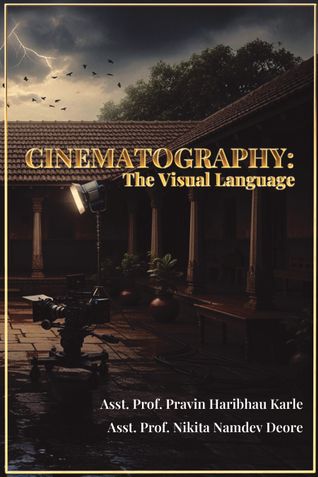
Type:
Print Book
Genre: Education & Language
Language: English
Price:
₹1,807
+ shipping
Description
Cinematography: The Visual Language is a comprehensive and accessible guide designed to transform the way aspiring filmmakers perceive the world behind the lens. Authored by Assistant Professors Pravin Haribhau Karle and Nikita Namdeo Deore, this manuscript bridges the gap between technical mastery and emotional artistry, making it an essential resource for students, independent creators, and cinema enthusiasts.
The book is built on the core philosophy that the story is king. It argues that a compelling, emotionally resonant narrative shot on a smartphone is far superior to a hollow story captured on an expensive cinema camera. Through ten meticulously structured chapters, the authors guide the reader from the foundational "grammar of the frame" to the complex "psychology of cinematic imagery."
A standout feature of this work is its deep immersion in Indian cinema. Rather than relying solely on Western examples, the book analyses the visual architecture of homegrown masterpieces. Readers will learn about the calming horizontal lines of Satyajit Ray’s Pather Panchali, the vibrant and poetic sinuous lines of Sanjay Leela Bhansali’s Devdas, the gritty realism of Gully Boy, and the psychological terror of light and shadow in Tumbbad and Bramayugam.
The manuscript is designed for the modern creator of 2025. It addresses the radical democratisation of filmmaking, offering practical advice on mobile cinematography, mirrorless camera trends, and the burgeoning role of Artificial Intelligence (AI) in colour grading and post-production. Recognising the changing landscape of media consumption, it also provides critical insights into adapting storytelling for vertical social media platforms and the "binge-watch" models of OTT services like Netflix and Hotstar.
To ensure "learning by doing," every chapter concludes with a "Questionary" to test knowledge and a "Basic Practical Task." These homework assignments encourage students to use the tools they already have—their smartphones—to experiment with lighting, focus, and composition in their own environments.
Cinematography: The Visual Language does not just teach you how to operate a camera; it teaches you how to think like a visual poet and a psychologist. It empowers you to use light, shadow, and movement to conduct a silent conversation with the audience’s subconscious. Whether you are a student in a city or a creative mind in a rural village, this book provides the vocabulary and the confidence to turn simple images into timeless stories.
About the Author
Book Details
ISBN: 9789355921734
Publisher: Pravin Haribhau Karle
Number of Pages: 293
Dimensions: 6"x9"
Interior Pages: Full Color
Binding:
Paperback (Perfect Binding)
Availability:
In Stock (Print on Demand)
Ratings & Reviews
CINEMATOGRAPHY: The Visual Language
Review This Book
Write your thoughts about this book.

Currently there are no reviews available for this book.
Be the first one to write a review for the book CINEMATOGRAPHY: The Visual Language.
Other Books in Education & Language

DHANESH SHARMA
Dr. Raj Kumar
SIVARAJAN PANDIAN
Sanya Gracy Munoruth