You can access the distribution details by navigating to My Print Books(POD) > Distribution
Add a Review
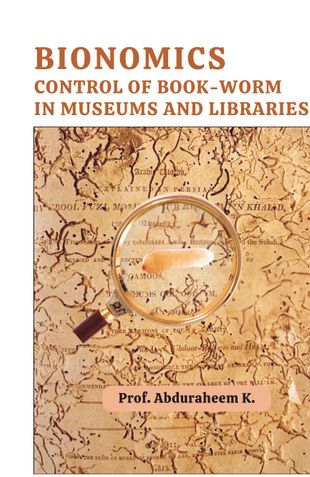
Bionomics, Control of Book-Worm in Museums and Libraries
Control of Book-Worm in Museums and Libraries
Prof. Abduraheem K.Description
Paper is widely used for writing, printing, and painting; it is found in the form of books, journals, paintings, manuscripts, and documents. There cannot be two opinions regarding the importance of the aforesaid paper-based materials, which form the very basis of our all-round intellectual and cultural activities.
As early as the 2nd century A.D., China began the practice of paper manufacturing, producing the precursor to modern paper (Russel, 1980). Most of the ancient paper was prepared by using cotton or clean white rags as raw materials. But the manufacture of modern paper is mainly based on raw materials like wood, cotton, straw, linen, and waste paper. These organic materials are rich sources of cellulose and hemicellulose and hence attract numerous pests.
Insects pose the greatest threat to cellulose materials. Most of the insects attack cellulose-containing materials for acquiring food and shelter. The presence of cellulose, starch, and gelatin on paper usually attracts potential insect pests.
Weiss et al. (1945) have published a bibliographical work entitled Insect Enemies of Books, in which the authors have dealt with five hundred references to research papers pertaining to insect pests of books. Roonwal et al. (1952), Kathpalia (1955, 1973 & 1987), Kishore (1961), Ivany (1968) have also mentioned about the pest attack on paper materials.
Nair (1975 & 1977), Alam (1983), Story (1985), Perti (1988), Agrawal (1983) and Bell and Singh (1993) have recorded some important insect pests of paper and other archival materials. Arai et al. (1975) have reported that larvae of Anobiids are one of the most important biological agents responsible for the deterioration of books in Japan.
Infestation of paper by Gastrallus indicus Reitter (Anobiidae: Coleoptera) is commonly found in tropical humid regions. Gastrallus indicus is commonly known as Bookworm. This species is frequently found in India and Burma. Several workers, such as Gardner (1921 & 1977), Husain (1929), Beeson (1941), Chakraborti (1942), Back (1947), Roonwal et al. (1952), Kishore (1961), Nair (1970, 1975 & 1977), Alam (1983), Nasheim (1984) and Joshi (1990), have reported severe damages caused by G. indicus to paper materials and palm-leaf manuscripts from different parts of the world.
Gardner (1921) has reported severe damage of books by G. indicus in the library of the Deputy Director of Agriculture at Mandalay (Burma). Chakraborti (1942) has found that some manuscripts received from Turkey (in Delhi, India) were infested by G. indicus. Nasheim has reported the same species infested on a large number of books in the Beinecke library of Yale University. In fact this was the first report on the presence of G. indicus in U.S.A. Wysoki (1971) has reported the occurrence of Gastrallus species in Israel, which he had confronted during his survey on Macadamia pests (Macadamia ternifolia is an exotic nut tree of Israel).
According to Harris (1992), several species of Gastrallus are known to damage books in Southeast Asia. Mani (1992) has reported that about sixty percent of the sixty thousand rare palm-leaf manuscripts have been severely damaged by bookworms in the University library of Kerala. Agrawal et al. (1992) asserted in their survey report on conservation status and needs in India that insect infestation, mainly by G. indicus, was responsible for the damage to books, paper materials and archival materials in more than thirty institutions in different parts of the country.
Kalshoven (1930) has recorded G. laticollis Pic. in Indonesia. Swezey (1933) found the same species in the Hawaiian Islands in cardboard that was transported from India. Many workers have reported the presence of Sitodrepa panicea Linn, a bookworm from India and Indonesia. However, there are grounds for suspicion that the presence of such a large number of records of this species may be due to the misidentification of G. indicus as Sitodrepa panicea (Roonwal and Chatterjee 1952). Gardner (1937) has described some larval forms of anobiids with a special reference to G. indicus, which helped in resolving the controversy regarding the differentiation between the larvae of G. indicus and S. panicea. Pic (1937) has reported that Gardner and Desai have collected G. pliticollis from Madras and G. birmanicus from Burma, respectively. Halperin J. et al. (1978), in their survey report on 'Insect feeding on wood products in Israel,' have mentioned that G. pulens Fairm. is a serious pest of paper and causes considerable damage to books in the libraries in Israel. Arnett (1973) has recorded G. marginipinnis Leconte, Gastrallus duval and Gastrallus austin from Colorado and California.
Beeson (1941) has pointed out that bookworm damage can be distinguished from that of other pests of books by the presence of circular pinholes (about 1 mm in diameter) in the book bindings. As reported by Nair (1977) and also the personal communication received from different museums and libraries by the present author, it seems that Book-Worm is widely distributed in India.
The present author has realized the economic importance of the insect G. indicus, as this species destroys valuable paper materials such as books, manuscripts, and allied archival materials. Therefore, our urgent attention is required to devise effective methods of prevention and control of its deleterious effects in order to save our precious collections.
Very scanty literature is available on the distribution, morphology, bionomics and control of the aforesaid pest, which indicates that not much work had been done on this species (Nair, 1977). Therefore, the present author has accepted the challenge to take up the study of the distribution, bionomics, food preference and some morphological aspects as a prerequisite for understanding bionomics and designing effective control strategies.
The adult and larval forms of the species were collected from the university library at Aligarh and they were reared in the Research Laboratory of the Department of Museology, A.M.U., using an Environmental Study Chamber.
The identification of the species was done after consultation with experts in the Entomology Section of the Department of Zoology, A.M.U., Aligarh and the same was confirmed by the International Institute of Entomology, London (Personal Communication dated 15.4.1992).
On the following pages, the author has tried to provide all the available information regarding G. indicus. Besides this, the author has also suggested some curative methods, based on the conclusions drawn from experiments, such as environmental control, fumigation techniques and use of insecticides for the control of the insect, with the hope that it would be informative to the curators of museums, archives and libraries, who would like to devise long-lasting control operations and precautionary measures for protecting their valuable collections.
About the Author
Book Details
ISBN: 9789349567801
Publisher: Bharat Publication House
Number of Pages: 145
Dimensions: 5.5"x8.5"
Interior Pages: B&W
Binding:
Hard Cover (Case Binding)
Availability:
In Stock (Print on Demand)
Ratings & Reviews
Bionomics, Control of Book-Worm in Museums and Libraries
Review This Book
Write your thoughts about this book.

Currently there are no reviews available for this book.
Be the first one to write a review for the book Bionomics, Control of Book-Worm in Museums and Libraries.
Other Books in Business & Economics
Bright Mills

Murari Madhab Mishra (Triple M)