You can access the distribution details by navigating to My Print Books(POD) > Distribution
Add a Review
Type:
Print Book
Genre: Religion & Spirituality
Language: Hindi
Price:
₹300
+ shipping
Description
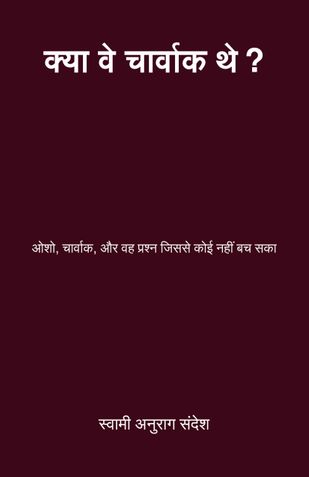
Charvaka, the ancient Indian school of thought known for its fierce materialism, is remembered today for only one thing—a license for hedonism, because nothing survives death. This image has endured because everything we know about Charvaka comes only from its detractors; not a single complete text of their own has survived to this day.
This book claims that this image fails to capture the true teaching. On a closer reading, Charvaka’s insistence on living life fully—without guilt, without postponement, and without the fear of the afterlife—might not have been an invitation to debauchery, but a precise instruction: to be so entirely present in this one life that no part of the mind looks toward tomorrow, not even in the hope of moksha (liberation). This is a far more difficult and disciplined teaching than the one remembered by history, and it arrives strikingly close to what an entirely different master was saying twenty-five centuries later in an ashram in Pune.
Written by an author who has been an Osho sannyasin for over two decades, this book justifies Osho’s discourses with the few surviving fragments of Charvaka, tests this comparison against current research in psychology and neuroscience, and brings both to the single question—what happens after death—where their paths truly diverge. For the rest of the journey, they say the exact same thing: stop waiting. This life is not a rehearsal for the next.
, प्राचीन भारत का वह विचारधारा जो कट्टर भौतिकवाद के लिए जानी जाती है, आज केवल एक बात के लिए याद की जाती है — भोग-विलास की खुली छूट, क्योंकि मृत्यु के बाद कुछ भी शेष नहीं रहता। यह छवि इसलिए टिकी रही क्योंकि चार्वाक के बारे में जो कुछ भी हम जानते हैं, वह उनके विरोधियों से ही मिला है — उनका अपना कोई भी सम्पूर्ण ग्रंथ आज तक नहीं मिला।
यह किताब दावा करती है कि यह छवि असली शिक्षा को नहीं पकड़ पाती। गौर से पढ़ने पर, चार्वाक का यह आग्रह कि जीवन को पूरी तरह जियो — बिना अपराधबोध के, बिना टालमटोल के, परलोक के भय के बिना — वह उच्छृंखलता का निमंत्रण नहीं, बल्कि एक सटीक निर्देश रहा होगा: इस एक जीवन में इतनी पूरी तरह उपस्थित रहो कि मन का कोई भी हिस्सा कल की ओर न ताके, यहाँ तक कि मोक्ष की आशा भी नहीं। यह इतिहास द्वारा याद की गई शिक्षा से कहीं अधिक कठिन और अनुशासित शिक्षा है, और आश्चर्यजनक रूप से यह उस बात के बहुत करीब जा पहुँचती है जो पच्चीस सदियों बाद, पुणे के एक आश्रम में, एक बिल्कुल अलग गुरु कह रहे थे।
दो दशकों से अधिक समय से ओशो संन्यासी रहे लेखक द्वारा लिखी गई यह किताब ओशो के प्रवचनों को चार्वाक के बचे हुए थोड़े-से अंशों के साथ रखकर देखती है, इस तुलना को मनोविज्ञान और न्यूरोसाइंस के मौजूदा शोध पर कसती है, और दोनों को उस एक प्रश्न तक ले जाती है — मृत्यु के बाद क्या होता है — जहाँ उनके रास्ते सचमुच अलग हो जाते हैं। बाकी पूरे रास्ते वे एक ही बात कह रहे हैं: प्रतीक्षा करना बंद करो। यह जीवन किसी अगले जीवन का पूर्वाभ्यास नहीं है।
About the Author
Book Details
ISBN: 9798903308903
Number of Pages: 143
Dimensions: 5.5"x8.5"
Interior Pages: B&W
Binding:
Paperback (Perfect Binding)
Availability:
In Stock (Print on Demand)
Ratings & Reviews
KYA WO CHARVAK THHE? (क्या वे चार्वाक थे?)
Review This Book
Write your thoughts about this book.

Currently there are no reviews available for this book.
Be the first one to write a review for the book KYA WO CHARVAK THHE? (क्या वे चार्वाक थे?).
Other Books in Religion & Spirituality

Nagesh Naik

Rajkumar Sharma

Yogi Arvind Chittumalla

Axum Publications, Faheem Judah-EL