You can access the distribution details by navigating to My Print Books(POD) > Distribution
Add a Review

হ্যানটেড কাহিনী ২
তাপসকিরণ রায়
The Chola Secret : RIHS Book 1
Priyanka Sharma
Kubra
Ved Prakash Sharma, Ved Prakash Sharma
Daayan
Ved Prakash Sharma, Ved Prakash Sharma
 Free Shipping
Description
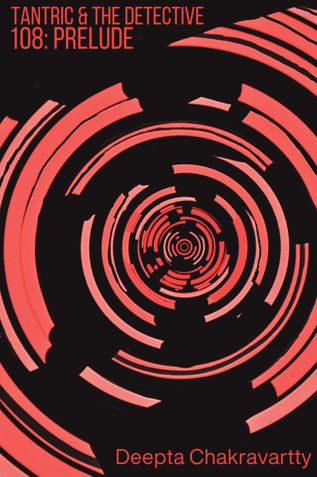
There are novels that tell stories – others that build worlds. And then there are novels that behave like doors. Tantric & the Detective – 108: Prelude belongs to the third category. This is not merely an occult thriller – or simply a crime fiction. This is a noir pilgrimage through a wounded landscape. Police stations smell of damp paper and nicotine – dying fluorescent tubes hum over interrogation rooms. Government corridors carry exhaustion like perfume. Murder scenes speak in symbols. Ritual survives bureaucracy. Faith and skepticism sit across interrogation tables and study each other.
The story begins with violence – a massacre. A household in North Bengal is transformed into something resembling ritual architecture. A family lies destroyed. Blood is arranged. Symbols emerge. Bodies cease being bodies and begin functioning like language. Police arrive expecting a crime scene. Instead they discover a puzzle. And among the ruins sits a man who should not be there. A tantric monk named Tarapada. He is covered in blood – he has saved the only surviving child. He claims divine guidance brought him there. Naturally, the police arrest him. There are Annexures of Tarapada's arrest memo, seizure list, FIR and police drama all leading to Kolkata.
Now enters, the detective - Kailash Mukherjea, Deputy Inspector General, Criminal Investigations Department of Homicide. He is a senior investigator with institutional authority, procedural intelligence, moral flexibility, and deep-rooted personal history. He belongs equally to police bureaucracy and inherited memory. He is the kind of investigator who understands that criminal networks, logistics routes, political structures, and organized violence create more believable explanations than ghosts. And yet: He keeps encountering things that resist reduction.
Many novels use cities. Few inhabit them. The emotional architecture of this series is deeply Bengali. The geography feels lived rather than researched. That environmental intelligence is what gives the novel its noir identity.
The book does not treat Tantra as decorative wallpaper. The investigation slowly suggests that ritual violence may not simply represent belief systems. This shift – from ritual as aesthetics to ritual as information – is one of the novel’s strongest ideas.
108: Prelude is preparing mythology. The police work feels real. Documentation matters. Paperwork appears constantly. Phantom entering police paperwork creates dread. Police officers carry scenes home. Doctors become exhausted. Investigators lose sleep. Violence leaves residue. The atmosphere here is real. More intimate, procedural and psychologically contaminated.
One of the novel’s most compelling layers emerges gradually: History is operationally alive.
Kailash increasingly discovers that personal history may be inseparable from case history. Civilizations do not disappear – they accumulate. And sometimes they leak. Readers finish Prelude with the sense that they have discovered an entrance rather than a conclusion.
Ultimately, despite mythology and murder and history and ritual – The relationship between Tarapada and Kailash creates the novel’s emotional engine – not friendship or opposition.
More unstable than that – They need each other while distrusting the frameworks through which the other understands reality.
This is noir occult realism. A world where ancient systems continue operating beneath modern infrastructure.
Tantric & the Detective – 108: Prelude asks readers to observe – tolerate ambiguity – sit inside sensory spaces – may be not every mystery wants solving.
Some novels spin stories. Others create atmosphere. While a few leave fingerprints, This one may leave a door slightly ajar. As the convergence slowly starts to ripple by the end of 108: Prelude we know this is only the beginning.
About the Author
Book Details
ISBN: 9789359671178
Publisher: Deepta Chakravartty
Number of Pages: 497
Dimensions: 6.00"x9.00"
Interior Pages: B&W
Binding:
Paperback (Perfect Binding)
Availability:
In Stock (Print on Demand)
Ratings & Reviews
Tantric and The Detective
Review This Book
Write your thoughts about this book.
Currently there are no reviews available for this book.
Be the first one to write a review for the book Tantric and The Detective.
Other Books in Mystery & Crime, Horror

তাপসকিরণ রায়
Priyanka Sharma

Ved Prakash Sharma, Ved Prakash Sharma
Ved Prakash Sharma, Ved Prakash Sharma