You can access the distribution details by navigating to My Print Books(POD) > Distribution
Add a Review

Dev and The Sun-Stone Chronicles
K. P.
bharitya nyay sanhita 2023 (marathi)
Mr. Imran Rashid Shaikh
Relevance of Indian Indigenous Education System for Modern ...
Dr. Saroj Kumar Sahoo, Simran Babu, Dr. Sandhyarani ...
GK-Famous Birthdays
Madan Gopal Goel
This book ships within India only.
 Free Shipping
Description
In the summer of 2026, India watched a nationwide education revolt play out in real time. A satirical social media page turned into a movement of tens of thousands. A sitting Education Minister resigned. For the first time in years, crowds in the street openly called for a Prime Minister to step down — all because of one leaked exam paper.
It was never really about one exam. It never is.
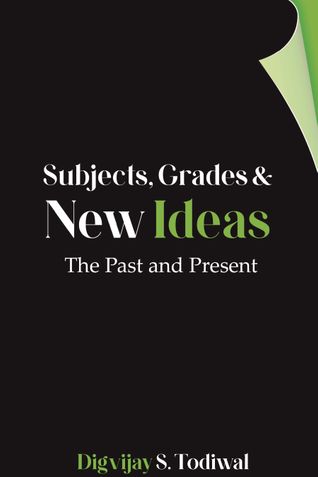
Subjects, Grades & New Ideas is a teacher's unflinching, meticulously sourced account of exactly how India's education system arrived at that breaking point — and it does not let anyone off the hook.
It starts with grades: the obsession that turns a ten-year-old's report card into a verdict on their worth, and the mental health emergency quietly building underneath it. From there it moves into politics, tracing how nearly every major figure in Indian political history — Nehru, Indira Gandhi, Rajiv Gandhi, Modi — has rewritten textbooks and reshaped classrooms to serve their own legacy, regardless of party or ideology. It confronts India's rigid Science–Commerce–Humanities streaming system and the real cost of forcing fifteen-year-olds into life-defining choices they are nowhere near ready to make, in the chapter the author found hardest to write: the one connecting subject choice to student suicide. It follows the money into India's booming private coaching industry, and the quiet conflict of interest sitting at the centre of it. And it ends by asking the one question every other chapter has been circling: what is any of this actually for? — tracing the idea of schools-as-factories back through Ivan Illich and Michel Foucault, all the way to the 2026 revolt itself.
What sets this book apart from the usual education-reform commentary is where it comes from. The author is not writing from a think tank or a columnist's remove. He is a working teacher, and a former student of this exact system, and he turns the same unflinching eye on himself that he turns on the politicians, the coaching institutes, and the parents he writes about. Every chapter is backed by original sourcing — court records, government data, and more than fifty endnoted citations — because the goal was never simply to vent. It was to build a case that could survive being argued with.
This is Part One of a two-part series. Its job is diagnosis: to strip away, chapter by chapter, the comfortable stories India tells itself about its own schools, and show the machine underneath — plainly, and without softening the parts that are hardest to look at. It does not offer solutions. That is deliberate. Part Two will.
Readers looking for a balanced, both-sides survey should look elsewhere. Readers who want to understand exactly how India's classrooms arrived at open revolt, and who is responsible, will find that here.
This is not a comfortable book. It was not written to be one.
About the Author
Book Details
ISBN: 9789334484106
Number of Pages: 102
Dimensions: 6"x9"
Interior Pages: B&W
Binding:
Paperback (Perfect Binding)
Availability:
In Stock (Print on Demand)
Ratings & Reviews
Subjects, Grades and New Ideas: The Past and Present
Review This Book
Write your thoughts about this book.
Currently there are no reviews available for this book.
Be the first one to write a review for the book Subjects, Grades and New Ideas: The Past and Present.
Other Books in Education & Language

K. P.
Mr. Imran Rashid Shaikh
Dr. Saroj Kumar Sahoo, Simran Babu, Dr. Sandhyarani ...

Madan Gopal Goel