You can access the distribution details by navigating to My Print Books(POD) > Distribution
Add a Review

Story of Mahabharata Part 2
KAUSHAL KISHORE
இன்பவாழ்வு
திரு. வி. கலியாணசுந்தரனார்
Notebandi 20-2000
Hiten atara
मुगलों का अंत
राज किशोर शर्मा 'राजे'
 Free Shipping
Description
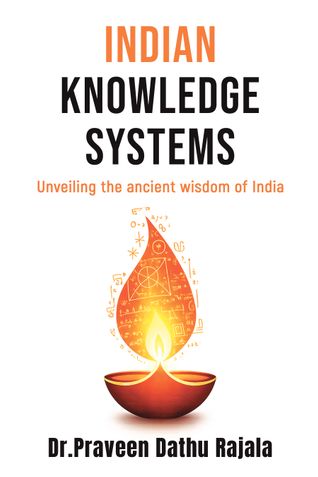
India is not just one of the world’s oldest civilizations — it is one of the greatest knowledge traditions in human history.
Indian Knowledge Systems presents a comprehensive and accessible exploration of Bharat’s timeless intellectual heritage. From the profound wisdom of the Vedas and Upanishads to groundbreaking contributions in mathematics, astronomy, medicine, governance, arts, and education, this book reveals how India developed a holistic and integrated system of knowledge thousands of years ago.
This book provides a comprehensive and structured exploration of the Indian Knowledge System (IKS), covering its philosophical foundations, scientific contributions, cultural richness, and educational traditions.
The content is systematically organized into IX thematic sections with 32 Chapters to give readers a clear and holistic understanding of India’s intellectual heritage:
Part I: Introduction to Indian Knowledge System
Covers the definition, scope, significance, historical evolution, sources, and the oral and written traditions that preserved knowledge across generations.
Part II: Foundations of Indian Knowledge System
Explores core components such as Chaturdasa Vidyasthanas, the Four Vedas, Upavedas, Vedangas, and the Puranas.
Part III: Philosophy and State Ethics in Epics
Examines key philosophical and ethical ideas from the Ramayana, Mahabharata, and Bhagavad Gita, including Purusharthas, governance principles, and dharmic leadership.
Part IV: Philosophy of Governance in Arthasastra
Focuses on ancient Indian statecraft, political thought, and administrative systems as presented in the Arthasastra.
Part V: Language, Literature, and Philosophy
Highlights the role of Sanskrit and classical languages, grammar traditions, philosophical schools, and literary aesthetics including Alankara Shastra and Rasa theory.
Part VI: Indian Sciences and Mathematics
Covers major contributions in mathematics, astronomy, physics, chemistry, and metallurgy, featuring scholars like Aryabhata, Brahmagupta, and Varahamihira.
Part VII: Ayurveda and Life Sciences
Discusses traditional Indian medical systems including Ayurveda, concepts of Tridosha and Prakriti, as well as Charaka, Sushruta, Siddha, and Unani traditions.
Part VIII: Education and Pedagogical Traditions
Explores the Gurukula system, ancient universities like Nalanda and Takshashila, and their global academic contributions.
Part IX: Indian Architecture, Art, Dance, and Music
Includes urban planning of the Indus Valley Civilization, temple architecture styles, painting traditions, classical dances, folk arts, and Indian classical music.
The book concludes with references and author insights, making it a valuable resource for students, competitive exam aspirants, and anyone interested in understanding India’s rich knowledge traditions in a structured and accessible manner.
About the Author
Book Details
ISBN: 9789358901214
Publisher: Dr.Praveen Dathu Rajala
Number of Pages: 193
Dimensions: 6"x9"
Interior Pages: B&W
Binding:
Paperback (Perfect Binding)
Availability:
In Stock (Print on Demand)
Ratings & Reviews
INDIAN KNOWLEDGE SYSTEMS
Review This Book
Write your thoughts about this book.
Currently there are no reviews available for this book.
Be the first one to write a review for the book INDIAN KNOWLEDGE SYSTEMS.
Other Books in History
KAUSHAL KISHORE

திரு. வி. கலியாணசுந்தரனார்

Hiten atara

राज किशोर शर्मा 'राजे'