You can access the distribution details by navigating to My pre-printed books > Distribution
Add a Review
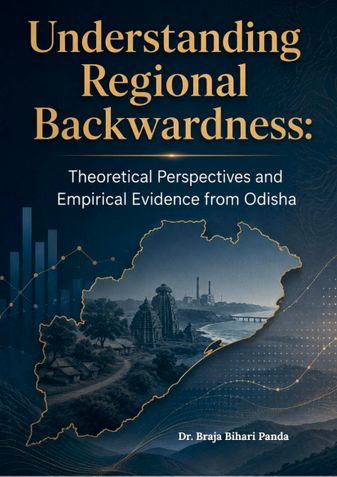
Understanding Regional Backwardness (eBook)
Theoretical Perspectives and Empirical Evidence from Odisha
Type:
e-book
Genre: Education & Language
Language: English
Price:
₹0
Description
Backward region development is the focus of economic planning, as it attracts the attention of
economic thinkers worldwide, particularly in developing economies. In a vast country like
India, regions with different resource bases and endowments would have dissimilar growth
paths over time. And even a small difference in the growth rate, when cumulated over long
periods, creates large differences in the economic development of the regions and intensifies
the problem of backwardness in certain pockets. Myrdali
explained this phenomenon as
Cumulative Causation: “Economic development having started in some advantageous region
continues to develop in that place, and the resultant effect of market forces normally tends to
increase rather than decrease inequalities between regions”. The journey of development in
modern India for this study can be better analysed from the time of independence, with a brief
background of colonial rule. British rule ruined the economy and left a backward, squeezed
economy plagued by utter regional imbalance, as the imperial power distorted economic
activity to serve its interests, as described in the “Drain of wealth” Theory by Dadabhai
Naorojiii. A few centres like Bombay, Calcutta, Madras and Delhi, along with a few subcentres like Ahmedabad, Kanpur and Hyderabad, were the epicentres of all types of economic
activity, leaving other areas in the backwaters of underdevelopment. Hence, we are left with
stark inter- and intra-regional disparities between a few urban centres and the vast exploited
area
About the Author
Book Details
ISBN: 9788169407755
Publisher: Agnileaf
Number of Pages: 21
Availability:
Available for Download (e-book)
Ratings & Reviews
Understanding Regional Backwardness
Review This Book
Write your thoughts about this book.

Currently there are no reviews available for this book.
Be the first one to write a review for the book Understanding Regional Backwardness.
Other Books in Education & Language

Manjit Inder Singh Saggoo

Megha Chittora

Amol Mahajan

Revamping Higher Education: Vision, Insight and Implications