You can access the distribution details by navigating to My pre-printed books > Distribution
Add a Review
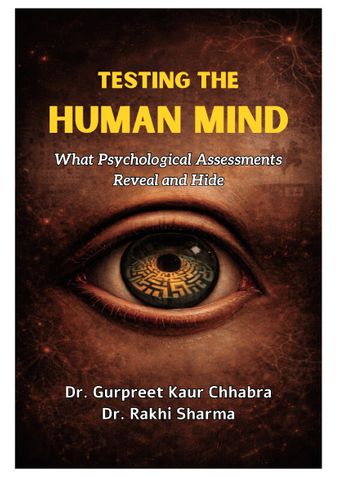
Testing the Human Mind: What Psychological Assessments Reveal and Hide (eBook)
Type:
e-book
Genre: Diet & Health
Language: English
Price:
₹200
(Immediate Access on Full Payment)
Description
Understanding the human mind has long been one of humanity’s most compelling pursuits. From ancient reflections on character and temperament to modern scientific efforts to quantify cognition and emotion, people have sought ways to explain why we think, feel, and behave as we do. Psychological assessments represent one of the most influential tools developed in this quest. They promise objectivity, clarity, and measurable insight into mental processes that are otherwise invisible. Yet alongside their power lies a paradox: what these tests reveal can be illuminating, but what they overlook may be equally significant.
This book, Testing the Human Mind: What Psychological Assessments Reveal-and Hide, was written to explore that paradox. Psychological tests shape decisions that affect education, employment, healthcare, legal outcomes, and personal identity. A single score may determine whether a child receives special support, whether an applicant is hired, or whether a patient receives treatment. Such influence demands careful scrutiny. Are these instruments truly capturing the essence of human ability and personality, or are they approximations shaped by cultural assumptions, methodological limits, and practical constraints?
The chapters that follow examine psychological assessment from multiple perspectives-historical, theoretical, clinical, educational, organizational, and ethical. Rather than presenting tests as either flawless scientific achievements or fundamentally flawed tools, this book aims to offer a balanced view. Assessments can provide valuable information when used responsibly, but they cannot replace nuanced understanding of individual lives. Human beings are more than data points; context, experience, motivation, and meaning play roles that no standardized instrument can fully measure.
Another goal of this book is accessibility. Psychological testing is often discussed in technical language that can be difficult for non-specialists to understand. While grounded in established research and professional practice, this text is written to be approachable for students, educators, practitioners, policymakers, and general readers alike. It explains key concepts without assuming prior expertise, while still addressing the complexities and controversies that define the field.
Particular attention is given to issues of fairness and inclusivity. Assessments developed within one cultural or linguistic environment may not translate seamlessly into another. Socioeconomic differences, educational opportunities, and lived experiences can influence performance in ways that are unrelated to the traits being measured. Recognizing these influences is essential for ethical practice and for avoiding harmful misinterpretations.
The book also looks forward. Advances in neuroscience, digital technology, and artificial intelligence are reshaping how psychological data are collected and analysed. Adaptive testing platforms, wearable devices, and large-scale behavioural datasets promise unprecedented precision, but they also raise questions about privacy, consent, and algorithmic bias. As measurement tools become more sophisticated, society must consider not only what can be measured but what should be measured-and how results should be used.
Ultimately, this work invites readers to think critically about the role of psychological assessments in modern life. Tests can open doors to understanding, support, and opportunity, but they can also narrow perspectives if treated as definitive judgments. The human mind is dynamic, multifaceted, and deeply influenced by context. No instrument, however advanced, can fully capture its richness.
If this book encourages readers to view assessment results not as final verdicts but as starting points for deeper inquiry, it will have achieved its purpose. The hope is that professionals will apply these tools more thoughtfully, institutions will use them more responsibly, and individuals will interpret them with greater awareness of both their strengths and their limitations.
About the Authors
Book Details
ISBN: 9789375590149
Publisher: WISSIRA RESEARCH LAB
Number of Pages: 144
Availability:
Available for Download (e-book)
Ratings & Reviews
Testing the Human Mind: What Psychological Assessments Reveal and Hide
Review This Book
Write your thoughts about this book.

Currently there are no reviews available for this book.
Be the first one to write a review for the book Testing the Human Mind: What Psychological Assessments Reveal and Hide.
Other Books in Diet & Health
Siva Prasad

RAHUL SINGH BHADORIYA

Somabhai Patel

Gene Ashburner