You can access the distribution details by navigating to My pre-printed books > Distribution
Add a Review
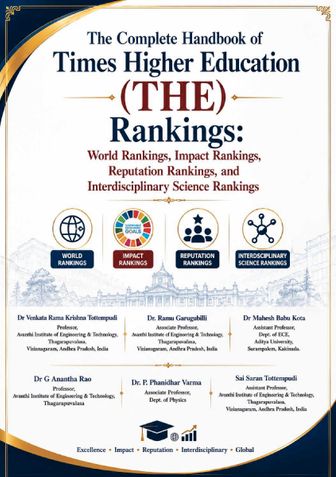
The Complete Handbook of Times Higher Education (THE) Rankings: World Rankings, Impact Rankings, Reputation Rankings, and Interdisciplinary Science Rankings (eBook)
Type:
e-book
Genre: Self-Improvement
Language: English
Price:
₹200
(Immediate Access on Full Payment)
Description
The Complete Handbook of Times Higher Education (THE) Rankings: World Rankings, Impact Rankings, Reputation Rankings, and Interdisciplinary Science Rankings is a comprehensive reference designed to assist higher education institutions, university leaders, policymakers, researchers, accreditation professionals, ranking coordinators, faculty members, and quality assurance practitioners in understanding and implementing the principles, methodologies, and strategic practices associated with the Times Higher Education (THE) global ranking systems. As international university rankings increasingly influence institutional reputation, student mobility, research collaboration, funding opportunities, industry partnerships, and policy decisions, universities must adopt evidence-based strategies that align institutional priorities with globally recognized performance indicators. This handbook provides an integrated framework for understanding the philosophy, methodology, indicators, data requirements, and strategic implementation approaches underlying the major THE ranking systems while offering practical guidance for institutional transformation and continuous quality improvement.
The handbook begins by presenting the evolution of global university rankings and their growing significance in the international higher education ecosystem. It examines the emergence of ranking systems as instruments for benchmarking institutional performance, promoting transparency, enhancing accountability, and encouraging excellence in teaching, research, innovation, international engagement, sustainability, and societal impact. The book explains how university rankings have evolved from simple reputation-based comparisons to multidimensional evaluation frameworks that assess academic quality using quantitative and qualitative indicators supported by validated institutional evidence and bibliometric databases. By establishing this foundation, the handbook enables readers to appreciate the strategic importance of ranking participation in shaping institutional competitiveness and global recognition.
A major component of the handbook is devoted to the Times Higher Education World University Rankings (THE WUR). The book provides a detailed explanation of the ranking philosophy, indicator framework, data collection processes, normalization techniques, and scoring methodologies employed in evaluating universities worldwide. Individual performance pillars—including Teaching, Research Environment, Research Quality, International Outlook, and Industry—are discussed comprehensively, highlighting their objectives, indicators, weighting mechanisms, and contribution to the overall institutional score. The handbook further examines the role of bibliometric indicators, citation impact, research productivity, international collaboration, doctoral education, industry income, and knowledge transfer in determining institutional performance. Practical guidance is offered on interpreting ranking outcomes, identifying institutional strengths and weaknesses, and developing evidence-based action plans for sustainable improvement.
Recognizing the increasing importance of research analytics, the handbook presents an extensive discussion on bibliometric evaluation and research performance measurement. It explains the application of citation-based indicators, Field-Weighted Citation Impact (FWCI), publication normalization across disciplines and publication years, self-citation management, research integrity, and responsible research assessment. The handbook discusses the integration of bibliometric data from internationally recognized scholarly databases and explains how research quality indicators influence global ranking outcomes. Emphasis is placed on responsible publication practices, interdisciplinary collaboration, high-quality research dissemination, and institutional strategies that improve both research visibility and scholarly impact while maintaining ethical standards.
The handbook also provides a comprehensive treatment of the Times Higher Education Impact Rankings, which evaluate universities based on their contributions to the United Nations Sustainable Development Goals (SDGs). The text explains the objectives, assessment framework, evidence requirements, and scoring methodology associated with the Impact Rankings. Each Sustainable Development Goal is discussed with respect to institutional policies, research activities, outreach programs, community engagement, governance initiatives, environmental sustainability, and social responsibility. Detailed guidance is provided on evidence collection, documentation, institutional reporting, stakeholder engagement, and policy implementation necessary for achieving strong performance across individual SDGs. The handbook emphasizes that sustainable development has become an essential dimension of institutional excellence and demonstrates how universities can integrate sustainability into teaching, research, operations, and community service.
Another significant contribution of the handbook is its detailed explanation of the Times Higher Education World Reputation Rankings. Institutional reputation is increasingly recognized as an important measure of global academic influence and leadership. The handbook discusses the methodology of academic reputation surveys, voter diversity, disciplinary representation, geographic balance, self-voting safeguards, vote concentration, and institutional visibility. It explains the statistical techniques used to ensure fairness, transparency, and reliability while identifying practical strategies universities can adopt to strengthen international recognition through research excellence, academic collaboration, faculty achievements, global partnerships, and effective institutional branding. The discussion illustrates how long-term investments in quality education and impactful research contribute to sustained global reputation.
The book further explores the Times Higher Education Interdisciplinary Science Rankings (ISR), one of the newest developments in global university assessment. Recognizing that contemporary societal challenges require collaborative research across multiple disciplines, the handbook explains the conceptual foundation, methodological framework, data sources, evidence requirements, survey mechanisms, and evaluation criteria associated with ISR. It discusses interdisciplinary research inputs, processes, outputs, organizational structures, funding mechanisms, collaboration networks, and institutional policies that promote cross-disciplinary innovation. Guidance is provided on building interdisciplinary research ecosystems, strengthening institutional governance for collaborative science, documenting interdisciplinary activities, and aligning research strategies with emerging global scientific priorities.
Beyond explaining individual ranking systems, the handbook integrates broader themes that contribute to institutional excellence. Dedicated chapters examine research excellence, innovation ecosystems, entrepreneurship, industry collaboration, internationalization, digital transformation, governance, leadership, quality assurance, accreditation, and strategic institutional planning. The role of academic leadership in developing research culture, attracting international faculty and students, strengthening partnerships, improving graduate employability, and promoting innovation is explored in detail. The book demonstrates how ranking success is closely linked to institutional vision, effective governance, strategic investment, stakeholder engagement, and continuous monitoring of key performance indicators.
An important feature of the handbook is its practical orientation. Rather than focusing solely on theoretical descriptions of ranking methodologies, it provides actionable strategies for institutional improvement through strategic roadmaps, implementation frameworks, evidence management systems, performance dashboards, benchmarking techniques, and continuous quality enhancement mechanisms. Universities are guided in establishing ranking cells, developing institutional databases, strengthening data governance, monitoring performance indicators, and preparing evidence for ranking submissions. The inclusion of sample formats, templates, institutional action plans, reporting mechanisms, documentation practices, and best-practice models makes the handbook an effective operational guide for higher education institutions seeking measurable improvements in global rankings.
The handbook also addresses emerging trends influencing the future of higher education and university rankings. Topics such as artificial intelligence, digital learning ecosystems, open science, responsible research assessment, research data management, sustainability reporting, global research collaboration, interdisciplinary innovation, learning analytics, and data-driven institutional decision-making are examined within the context of evolving international ranking frameworks. These discussions encourage universities to adopt adaptive strategies that strengthen resilience, innovation capacity, academic excellence, and global competitiveness while responding effectively to changing societal and technological demands.
Designed as a comprehensive academic reference, this handbook serves multiple stakeholders, including vice-chancellors, presidents, registrars, deans, directors, ranking coordinators, institutional research offices, IQACs, accreditation committees, policymakers, faculty members, researchers, doctoral scholars, and postgraduate students. It bridges the gap between ranking methodologies and institutional practice by translating complex evaluation frameworks into practical strategies for planning, implementation, monitoring, and continuous improvement. The interdisciplinary approach adopted throughout the handbook ensures that readers gain both conceptual understanding and operational guidance applicable across diverse institutional contexts.
Ultimately, The Complete Handbook of Times Higher Education (THE) Rankings: World Rankings, Impact Rankings, Reputation Rankings, and Interdisciplinary Science Rankings presents a holistic roadmap for achieving institutional excellence in a globally competitive higher education environment. By integrating rigorous analysis of ranking methodologies with strategic planning, research excellence, sustainability, innovation, governance, and quality assurance, the handbook empowers universities to enhance their academic performance, strengthen their international standing, and contribute meaningfully to knowledge creation and sustainable societal development. It is intended to function not merely as a reference on ranking systems but as a strategic guide for institutional transformation, enabling higher education institutions to pursue excellence with integrity, evidence-based decision-making, and a long-term commitment to global impact.
About the Authors
Book Details
Publisher: Self
Number of Pages: 2213
Availability:
Available for Download (e-book)
Ratings & Reviews
The Complete Handbook of Times Higher Education (THE) Rankings: World Rankings, Impact Rankings, Reputation Rankings, and Interdisciplinary Science Rankings
Review This Book
Write your thoughts about this book.

Currently there are no reviews available for this book.
Be the first one to write a review for the book The Complete Handbook of Times Higher Education (THE) Rankings: World Rankings, Impact Rankings, Reputation Rankings, and Interdisciplinary Science Rankings.
Other Books in Self-Improvement

Sanjay Soni

Nithin Raphael Devassy

Purnima Chopra

Dr. SIDDHESHWAR KATAKOL