You can access the distribution details by navigating to My pre-printed books > Distribution
Add a Review
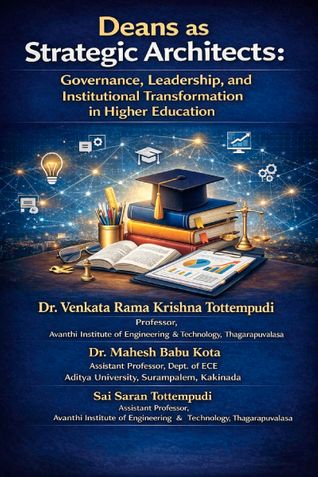
Deans as Strategic Architects: Governance, Leadership, and Institutional Transformation in Higher Education (eBook)
Type:
e-book
Genre: Self-Improvement
Language: English
Price:
₹200
(Immediate Access on Full Payment)
Description
Contemporary higher education institutions operate in an increasingly complex environment shaped by globalization, digital transformation, demographic changes, evolving labor market demands, and intensifying competition for talent, resources, and reputation. Within this context, the role of academic leadership has undergone significant transformation. Among the various leadership positions in universities, the office of the Dean has emerged as a critical strategic node that connects institutional vision, governance frameworks, academic quality, and operational execution. This book conceptualizes Deans not merely as administrative managers of faculties or departments but as strategic architects of institutional systems, responsible for designing governance mechanisms, enabling academic innovation, ensuring accountability, and guiding universities through periods of rapid transformation. By reframing the role of Deans within a governance and systems perspective, the work highlights how effective deanship can shape institutional direction, strengthen academic ecosystems, and create sustainable pathways for institutional growth and societal impact.
Traditionally, Deans were perceived primarily as intermediaries between senior university leadership and academic departments, responsible for coordinating teaching schedules, managing faculty matters, and overseeing routine administrative processes. However, the contemporary university demands a much broader and more strategic orientation from its academic leaders. Deans today must operate at the intersection of policy design, strategic planning, stakeholder engagement, and performance governance. They are expected to align faculty initiatives with institutional missions, translate strategic priorities into implementable programs, ensure regulatory and accreditation compliance, and support interdisciplinary collaboration that advances research, teaching, and community engagement. This transformation reflects a shift from administrative stewardship to strategic leadership, where Deans function as architects who design institutional structures capable of sustaining quality, equity, innovation, and competitiveness in higher education.
The concept of “strategic architecture” serves as a central analytical lens throughout this work. Just as architects design systems that balance structure, functionality, and aesthetics, Deans design institutional frameworks that integrate governance processes, academic objectives, and stakeholder expectations. Strategic architecture in higher education involves creating coherent linkages between policy frameworks, operational mechanisms, and performance evaluation systems. Deans must develop governance models that enable clarity of authority, transparency of decision-making, and accountability of outcomes while fostering a culture of collaboration and innovation among faculty members, administrators, and external partners. Through this architectural perspective, the book illustrates how Deans play a foundational role in shaping institutional ecosystems that are both resilient and adaptive in the face of external challenges.
Governance constitutes one of the most critical dimensions of the Dean’s strategic role. Universities operate within complex regulatory environments influenced by government policies, accreditation bodies, and international rankings frameworks. Deans must therefore ensure that institutional policies and academic programs comply with statutory requirements while also advancing institutional aspirations for excellence. Effective governance under the leadership of Deans involves establishing clear policy frameworks, structured reporting systems, evidence-based decision-making processes, and robust internal quality assurance mechanisms. By embedding governance structures into academic operations, Deans help universities maintain credibility, transparency, and trust among stakeholders, including students, faculty, regulators, and society at large.
Leadership is another fundamental theme explored in this work. The modern Dean must combine administrative capability with visionary leadership that motivates academic communities to pursue shared institutional goals. This requires the ability to balance competing priorities such as academic autonomy and institutional accountability, innovation and regulatory compliance, and financial sustainability and social responsibility. Strategic Deans cultivate collaborative leadership cultures in which faculty members are empowered to contribute to institutional transformation while maintaining high standards of academic integrity and scholarly excellence. Through participatory decision-making processes and inclusive leadership practices, Deans foster environments where diverse perspectives contribute to institutional innovation and problem solving.
Institutional transformation represents the ultimate outcome of effective strategic leadership by Deans. Universities today must continuously evolve to respond to emerging societal challenges, technological disruption, and global competition for knowledge and talent. Deans serve as catalysts of this transformation by enabling curriculum innovation, strengthening research ecosystems, promoting interdisciplinary collaboration, and expanding partnerships with industry and communities. By aligning academic initiatives with long-term institutional strategies, Deans ensure that universities remain relevant and responsive to changing societal needs. Furthermore, strategic Deans play a crucial role in advancing principles of equity, diversity, and inclusion, ensuring that higher education institutions provide equitable opportunities for students and scholars from diverse backgrounds while contributing to social mobility and inclusive development.
Another important dimension highlighted in this book is the integration of data-driven decision-making and institutional analytics within governance processes. Modern universities increasingly rely on data to monitor academic performance, student success, research productivity, and financial sustainability. Deans must therefore lead the development of analytics-enabled governance systems that support evidence-based planning and strategic resource allocation. By leveraging institutional data, Deans can identify emerging trends, anticipate risks, and design interventions that enhance institutional effectiveness. This analytical capability strengthens transparency and accountability, enabling universities to demonstrate measurable outcomes to governing councils, accreditation bodies, and funding agencies.
The book also emphasizes the importance of collaborative ecosystems in contemporary university leadership. Deans operate within a network of stakeholders that includes vice-chancellors, provosts, department chairs, faculty members, students, government agencies, industry partners, and community organizations. Effective strategic architecture requires building strong partnerships across these constituencies to align institutional priorities with societal needs. Through such collaborative networks, Deans can mobilize resources, expand opportunities for experiential learning and research collaboration, and position universities as key contributors to regional and global development.
Ultimately, Deans as Strategic Architects: Governance, Leadership, and Institutional Transformation in Higher Education argues that the future of universities depends significantly on the ability of academic leaders to design governance systems that integrate vision, accountability, and innovation. By conceptualizing Deans as architects of institutional systems rather than merely administrative managers, the book provides a comprehensive framework for understanding how strategic leadership can shape the trajectory of higher education institutions. It offers insights into governance structures, leadership practices, and transformation strategies that enable universities to navigate complexity while maintaining their core academic mission. In doing so, the work contributes to the growing discourse on higher education governance and highlights the pivotal role of Deans in building institutions that are resilient, inclusive, and globally competitive in the twenty-first century.
About the Authors
Book Details
Publisher: Self
Number of Pages: 1209
Availability:
Available for Download (e-book)
Ratings & Reviews
Deans as Strategic Architects: Governance, Leadership, and Institutional Transformation in Higher Education
Review This Book
Write your thoughts about this book.

Currently there are no reviews available for this book.
Be the first one to write a review for the book Deans as Strategic Architects: Governance, Leadership, and Institutional Transformation in Higher Education.
Other Books in Self-Improvement

Ganesh Dhotre

Jayant Avva

Pearl Notes Publishing

Gaurav Garg