You can access the distribution details by navigating to My pre-printed books > Distribution
Add a Review
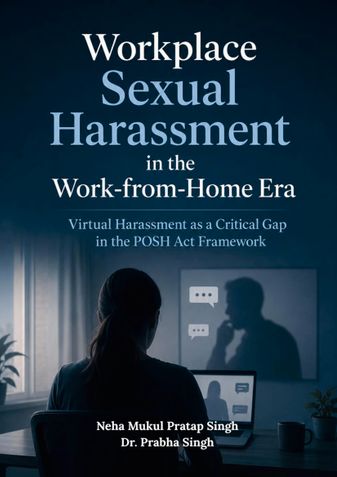
Workplace Sexual Harassment in the Work-from-Home Era (eBook)
Virtual Harassment as a Critical Gap in the POSH Act Framework
Type:
e-book
Genre: Education & Language
Language: English
Price:
₹0
Description
The pandemic has reimagined how and where work is done, yet it is not diminishing the necessity
for comprehensive measures to protect from workplace sexual harassment. Instead, misconduct
has increasingly expanded to virtual places like video conferencing, instant messaging, work
email, collaborative applications and other virtual areas connected to work. This raises a critical
legal and institutional issue in India: Are the provisions of the Sexual Harassment of Women at
Workplace (Prevention, Prohibition and Redressal) Act, 2013 (POSH Act) sufficient to prevent
sexual harassment in the context of work from home arrangements? The Act has been broadly
interpreted to cover non-traditional workplaces, but there is no explicit language in the statute
on virtual harassment which presents uncertainty during compliance and enforcement. This
article explores virtual harassment as a key area of omissions in the framework of the POSH Act.
It is not that there is no legal jurisdiction, but rather the gap between the office-centred
framework of the statutory rules and the nature of digitally mediated employment. With remote
employees, key compliance activities like prevention, boundary setting, reporting, investigation,
evidence preservation, confidentiality, and accountability are complex.
About the Authors
Book Details
ISBN: 9788169407502
Publisher: AgniLeaf
Number of Pages: 13
Availability:
Available for Download (e-book)
Ratings & Reviews
Workplace Sexual Harassment in the Work-from-Home Era
Review This Book
Write your thoughts about this book.

Currently there are no reviews available for this book.
Be the first one to write a review for the book Workplace Sexual Harassment in the Work-from-Home Era.
Other Books in Education & Language
Dr. Sonali Ramesh Khandekar, Dr. B. K. Sarkar, ...

Vivek Hattangadi
GN RAO
S.K Sunayak Bhagat