You can access the distribution details by navigating to My Print Books(POD) > Distribution
Add a Review
Type:
Print Book
Genre: Computers & Internet, Science & Technology
Language: English
Price:
₹475
+ shipping
This book ships within India only.
Description
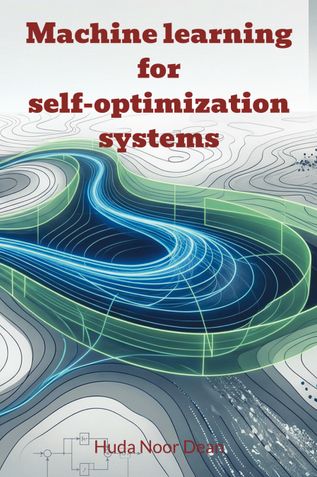
Stop Deployment Decay. Engineer Machine Learning Systems that Adapt, Survive, and Thrive in Dynamic Environments.
Conventional machine learning architectures are built on a fragile foundation: the Independent and Identically Distributed (IID) assumption. In the sterile, controlled environment of a static training dataset, these models excel. However, when exposed to the unpredictable, non-stationary realities of production, their performance inevitably degrades. This phenomenon—Deployment Decay—is the silent failure mode of modern enterprise AI.
To overcome this, engineering teams must move beyond traditional "deploy and forget" pipelines. This comprehensive volume establishes Autonomous Adaptive Systems as the necessary paradigm for maintaining continuous stability, safety, and performance in dynamic real-world environments.
Across twelve meticulously researched chapters, this text bridges the historical gap between empirical deep learning and rigorous control engineering. It synthesizes advanced control theory, causal inference, and modern neural architectures to address the core discrepancies that cause traditional machine learning systems to fail.
Inside, you will explore advanced concepts and practical frameworks, including:
Mathematical Foundations of Stability: Master system convergence guarantees and robustness using Lyapunov stability theory, moving beyond heuristic trial-and-error to mathematically provable adaptation.
Rapid Meta-Learning and Hypergradients: Leverage gradient-based meta-learning (MAML) and optimization algorithms that allow systems to "learn how to learn," ensuring they adapt to novel data distributions with minimal delay.
Structural Self-Optimization: Discover how to implement Differentiable Neural Architecture Search (DARTS) and dynamic network topologies, allowing your systems to adjust their computational capacity and internal structure in real-time based on operational load.
Safe and Constrained Exploration: Implement mathematically robust safety constraints using Control Barrier Functions (CBFs) and Lagrangian duality. Ensure that continuous, online learning never compromises system integrity or violates strict operational boundaries.
Production-Grade Engineering Patterns: Transition from theoretical mathematical constructs to practical, at-scale implementation. Learn architectural patterns for stateful learners, asynchronous feedback loops, and modified CI/CD pipelines specifically designed for self-adjusting systems.
Who This Book Is For:
Designed with rigorous technical depth, this work is an essential reference for:
Machine Learning Engineers & MLOps Professionals transitioning from static model deployment to dynamic, self-healing production environments.
Control Systems Researchers looking to apply classical stability metrics and feedback loops to modern deep learning architectures.
Academic Researchers and Graduate Students focusing on reinforcement learning, meta-learning, and safety-critical AI systems.
Whether you are designing a self-optimizing server cluster, a robotic control pipeline, or a dynamic financial forecasting model, this book provides the foundational framework required to build resource-aware, adaptive systems capable of surviving their full operational lifecycle.
Equip yourself with the theoretical rigor and practical engineering patterns required to build the next generation of resilient AI. Future-proof your machine learning deployments today.
Book Details
ISBN: 9798255973095
Publisher: Huda Noor Dean
Number of Pages: 330
Dimensions: 6"x9"
Interior Pages: B&W
Binding:
Paperback (Perfect Binding)
Availability:
In Stock (Print on Demand)
Ratings & Reviews
Machine learning for self-optimization systems
Review This Book
Write your thoughts about this book.

Currently there are no reviews available for this book.
Be the first one to write a review for the book Machine learning for self-optimization systems.
Other Books in Computers & Internet, Science & Technology

Ayindri Banerjee
Anshum

Anant Vijay Soni
Students' Academy