You can access the distribution details by navigating to My Print Books(POD) > Distribution
Add a Review
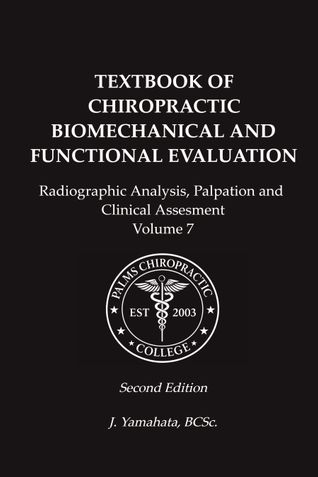
TEXTBOOK OF CHIROPRACTIC BIOMECHANICAL AND FUNCTIONAL EVALUATION
Radiographic Analysis, Palpation, and Clinical Assessment
J. YAMAHATADescription
TEXTBOOK OF CHIROPRACTIC BIOMECHANICAL AND FUNCTIONAL EVALUATION
Radiographic Analysis, Palpation, and Clinical Assessment
The ability to evaluate a patient accurately is one of the most important skills a chiropractor can develop. Before an adjustment can be delivered, before a care plan can be established, and before clinical outcomes can be measured, the practitioner must first understand what is happening within the patient.
For generations, chiropractors have relied upon a variety of analytical procedures to evaluate the spine and nervous system. Radiographic analysis provides insight into structural relationships and biomechanical adaptations. Static and motion palpation allow the clinician to assess segmental dysfunction and tissue changes. Postural examination, gait analysis, neurological testing, and functional assessment help reveal how these findings influence the patient's ability to function in everyday life.
This textbook brings these methods together into a comprehensive system of chiropractic evaluation.
Within these pages, the reader will learn the principles of radiographic interpretation, spinal and pelvic analysis, static and motion palpation, postural assessment, gait evaluation, range of motion testing, neurological examination, and functional outcome assessment. Rather than viewing these procedures as separate disciplines, this text demonstrates how they work together to form a complete clinical picture of the patient.
A central theme throughout this book is the understanding that structural findings alone do not define health. An X-ray may reveal biomechanical distortions that have developed over many years, yet the patient's current condition cannot be fully understood from the image alone. Likewise, tenderness, restricted motion, altered posture, impaired balance, and changes in daily activities often provide information that cannot be captured on a radiograph.
For this reason, the chiropractor must learn to evaluate both structure and function.
The objective is not simply to identify abnormal findings. The objective is to determine which findings are clinically meaningful, how they influence the patient's ability to function, and how those findings should guide clinical decision-making.
Whether assessing spinal biomechanics, vertebral motion, posture, gait, neurological performance, or activities of daily living, the practitioner must continually focus on the same essential question:
Is the patient functioning better?
Written for chiropractic students, practitioners, educators, and healthcare professionals, this textbook provides a practical foundation for developing analytical skills while emphasizing the relationship between biomechanical findings and functional outcomes.
Because successful chiropractic care is not measured solely by what is seen on an X-ray.
It is measured by what the patient is able to do, how they are able to live, and how effectively their body is able to function.
About the Author
Book Details
Publisher: PCC PRESS
Number of Pages: 348
Dimensions: 6.00"x9.00"
Interior Pages: B&W
Binding:
Paperback (Perfect Binding)
Availability:
In Stock (Print on Demand)
Ratings & Reviews
TEXTBOOK OF CHIROPRACTIC BIOMECHANICAL AND FUNCTIONAL EVALUATION
Review This Book
Write your thoughts about this book.

Currently there are no reviews available for this book.
Be the first one to write a review for the book TEXTBOOK OF CHIROPRACTIC BIOMECHANICAL AND FUNCTIONAL EVALUATION.
Other Books in Medicine & Science
Prof. Dr M Rajadurai


Om Prakash Verma

Dr.G.Nagaraju