You can access the distribution details by navigating to My Print Books(POD) > Distribution
Add a Review
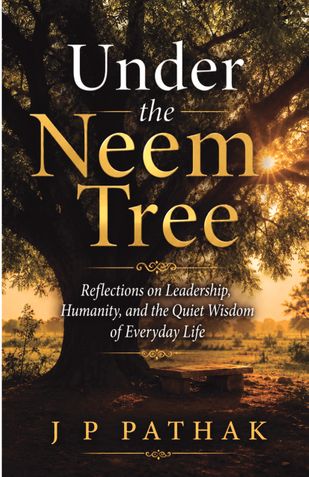
Under the Neem Tree
Reflections on Leadership, Humanity, and the Quiet Wisdom of Everyday Life
JP PathakType:
Print Book
Genre: Self-Improvement, Business & Economics
Language: English
Price:
₹338
+ shipping
This book ships within India only.
Description
Many years ago, in a small village, a neem tree stood quietly at the heart of the community. It was neither the tallest tree nor the oldest, yet it was where life naturally unfolded. Farmers rested beneath its shade after long days in the fields. Children played around its roots. Travellers paused before continuing their journeys. Elders gathered there to share stories, experiences, and wisdom earned over a lifetime.
The neem tree was more than a place of shelter—it was a silent witness to conversations, challenges, celebrations, and life's countless lessons.
As I reflect on my own journey, I realize that the most valuable lessons I have learned did not come from classrooms, boardrooms, or formal training programs. They emerged from meaningful conversations, thoughtful observations, and moments of quiet reflection. Sometimes a simple question, an unexpected story, or a different perspective was enough to change the way I understood people, leadership, and life.
Over the years, I have had the privilege of working with organizations of different sizes and across diverse industries. While every business faced unique circumstances, the human challenges remained remarkably similar. Leaders struggled to build trust. Teams searched for ownership and purpose. Individuals battled fear, self-doubt, and uncertainty. Organizations pursued growth, while people sought meaning.
The situations changed, but human nature did not.
That realization became the inspiration for this book.
Ramdas and Guru Ji are fictional characters, but the conversations they share reflect questions many of us encounter throughout our lives. Ramdas represents curiosity, aspiration, and the desire to learn. Guru Ji represents wisdom shaped by experience, observation, humility, and reflection. Their conversations may be imagined, but the lessons they uncover are rooted in real life.
This book offers stories that invite reflection, encourage meaningful conversations, and inspire us to see familiar situations from a fresh perspective.
The neem tree serves as the perfect setting because it symbolizes values that never lose their relevance—patience, wisdom, perspective, resilience, and human connection.
My hope is that these stories spark thoughtful conversations—not only within organizations, teams, and families, but also within ourselves. If, after turning these pages, you find yourself listening more carefully, leading more thoughtfully, and understanding people with greater empathy, then this book will have fulfilled its purpose.
So, let us begin.
The neem tree is waiting.
And so is the next conversation
About the Author
Book Details
Number of Pages: 183
Dimensions: 5.5"x8.5"
Interior Pages: B&W
Binding:
Paperback (Perfect Binding)
Availability:
In Stock (Print on Demand)
Ratings & Reviews
Under the Neem Tree
Review This Book
Write your thoughts about this book.

Currently there are no reviews available for this book.
Be the first one to write a review for the book Under the Neem Tree.
Other Books in Self-Improvement, Business & Economics

Pankaj Kumar

Kajal Gupta

Georgiana Farkas

Shakun Sharma