You can access the distribution details by navigating to My Print Books(POD) > Distribution
Add a Review
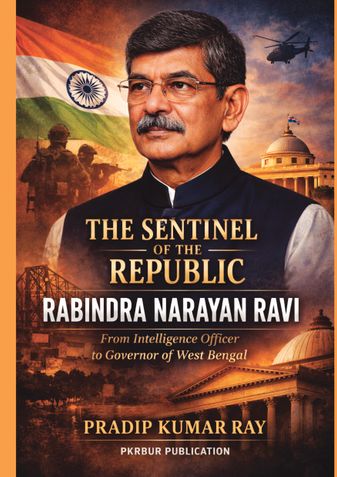
The Sentinel of the Republic: Ravindra Narayan Ravi
(From India’s Intelligence Officer to Governor of West Bengal)
Pradip Kumar Ray.Type:
Print Book
Genre: Biographies & Memoirs, History
Language: English
Price:
₹486
+ shipping
Description
Every book begins with a question. Sometimes it is a question directed outward, toward society and its institutions; at other times, it is a quiet inquiry within—an attempt to understand forces that are felt but not always seen. This work emerged from such a question: What truly sustains governance beyond its visible structures?
This book is an attempt to understand the deeper forces that sustain governance beyond its visible institutions. My motivation to write this work arose from a growing realization that much of what shapes the destiny of a nation remains outside the immediate awareness of the public. We often engage with governance through what is presented to us—public decisions, political developments, and institutional actions. Yet, behind these visible expressions lies a more intricate process, one that involves careful thought, disciplined execution, and a constant sense of responsibility carried by individuals working within the system.
The idea of exploring such a dimension required not only intellectual curiosity but also a subject through whom these themes could be meaningfully understood. The life and career of R. N. Ravi provided that opportunity. His journey, spanning the domains of intelligence, national security, and constitutional governance, reflects a rare continuity of service across different layers of the state.
The decision to write this book was therefore guided by two purposes. First, to present a structured and thoughtful account of a professional life that intersects with some of the most critical aspects of India’s national framework. Second, to offer readers an opportunity to reflect on the nature of governance itself—how it is shaped not only by institutions but also by the discipline, judgment, and integrity of those who serve within them.
In undertaking this work, I have been mindful of the importance of balance. The subject touches upon areas that are inherently complex—intelligence operations, internal security, and constitutional responsibilities. While the book seeks to provide insight into these domains, it does so with respect for their sensitivity and with an emphasis on understanding rather than disclosure. The relevance of this subject in the present context cannot be overstated. India, as a democratic republic of immense diversity, faces challenges that are both visible and subtle. Questions of security, governance, and institutional harmony continue to evolve. In such a landscape, there is value in examining how experience, strategy, and constitutional duty converge in shaping responses to these challenges.
This book does not claim to offer definitive answers. Instead, it seeks to open a space for reflection—an invitation to consider governance not merely as a system of authority but as a continuous process sustained by thought, effort, and responsibility.
I would like to acknowledge that any work of this nature is influenced by a wide range of sources—historical developments, institutional frameworks, and the broader discourse on public service and national security. While the narrative presented here is interpretative in nature, it is grounded in a sincere effort to maintain clarity, coherence, and respect for the subject. Finally, this book is written with the hope that it will contribute, in some measure, to a deeper appreciation of the responsibilities carried by those who serve the nation—often without recognition, yet with unwavering commitment.
If, through these pages, the reader is able to gain a more thoughtful perspective on governance and its underlying processes, the purpose of this work will have been fulfilled.
About the Author
Book Details
ISBN: 9788199663091
Publisher: PKRBUR PUBLICATION
Number of Pages: 189
Dimensions: A5
Interior Pages: B&W
Binding:
Paperback (Perfect Binding)
Availability:
In Stock (Print on Demand)
Ratings & Reviews
The Sentinel of the Republic: Ravindra Narayan Ravi
Review This Book
Write your thoughts about this book.

Currently there are no reviews available for this book.
Be the first one to write a review for the book The Sentinel of the Republic: Ravindra Narayan Ravi.
Other Books in Biographies & Memoirs, History

CHANDRA RAM

Vivek Sharma

Sudheer Reddy Pamireddy

Er. Mohammad Ashraf Fazili