You can access the distribution details by navigating to My Print Books(POD) > Distribution
Add a Review
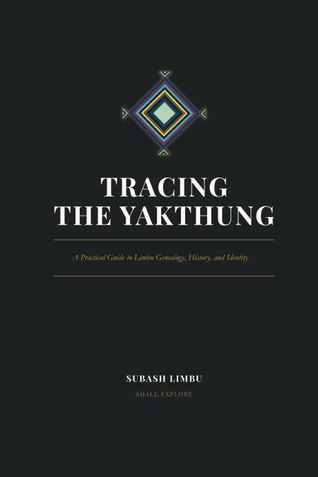
Tracing The Yakthung by Subash Limbu
A Practical Guide to Limbu Genealogy, History, and Identity
Subash LimbuDescription
Most of what has been written about the Limbu people was written by outsiders. This is an attempt to change that.
The Yakthung, known to the world as the Limbu, are the original inhabitants of Limbuwan, a defined territory spanning eastern Nepal, Sikkim, and the Darjeeling hills. They had their own kings, their own governance system, their own sacred land rights, and their own oral tradition stretching back over a thousand years. That tradition survives. But every year, fewer elders remain to pass it on.
Tracing the Yakthung is a practical guide for anyone who wants to understand where their Limbu family comes from. It has already become a starting point for diaspora families in the UK, Hong Kong, Australia, and the Gulf who are piecing their lineage back together, and for researchers and academics looking for a source that treats oral tradition as the legitimate historical record it has always been.
If you are a diaspora Limbu, a researcher, an academic, or simply someone who sat with an elder and realized how much was about to be forgotten, this book was written for you.
Inside, you will find:
The difference between Yakthung and Limbu, and why it matters
The full territorial history of Limbuwan and its nine districts
The 10 Thum and 29 Thum governance systems explained
Key Limbu kings, including King Sirijunga Hang and Te-ongsi Sirijunga Xin Thebe, the man who was killed for teaching his people to read
The 1774 Treaty of Salt and Water: what was promised and what was taken
How the Kipat communal land system worked and how it was abolished
Clan identity: how it works, how to find yours, and what it means
Clan to territory mapping across Taplejung, Panchthar, Ilam, Terhathum, and beyond
How to trace your own lineage through elders and oral tradition, with specific questions to ask before that knowledge is gone
The Limbu diaspora today: UK, Hong Kong, Gulf, Australia
The Sirijonga script: from suppression to PhD level study at Sikkim University
A full glossary, clan reference table, and recommended sources
This book does not pretend the gaps do not exist. The written record on Limbu history is thin, not because our history is thin, but because the systems that created written records were rarely interested in preserving it. Where sources are strong, this guide is specific. Where the record is incomplete, it says so honestly.
Every generation that passes without this knowledge being written down is a generation further from Mukkumlung, from Sewalungma, from the names our ancestors actually used. This book exists so that the next generation does not have to start from zero.
If you have ever wondered what your clan name means, where your family's land actually was, or what was lost between your grandparents' generation and yours, the answers are in here. Get your copy and start tracing your own line back to Limbuwan.
About the Author
Book Details
ISBN: 9798198560109
Number of Pages: 40
Dimensions: 6.00"x9.00"
Interior Pages: B&W
Binding:
Paperback (Saddle Stitched)
Availability:
In Stock (Print on Demand)
Ratings & Reviews
Tracing The Yakthung by Subash Limbu
Review This Book
Write your thoughts about this book.

Currently there are no reviews available for this book.
Be the first one to write a review for the book Tracing The Yakthung by Subash Limbu.
Other Books in History
Saurav Dutt

ગોવર્ધનરામ માધવરામ ત્રિપાઠી
राजकिशोर शर्मा 'राजे'
Yussouf Shaheen