You can access the distribution details by navigating to My Print Books(POD) > Distribution
Add a Review
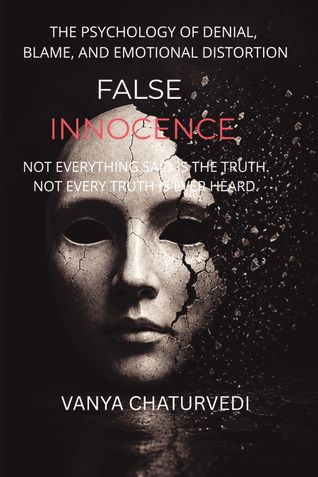
Description
Some conversations don't end.
They repeat.
Not in the same words-but in the same pattern.
A concern is raised.
It is softened.
It is redirected.
It is reframed.
And somehow, the original point never fully lands.
Instead of resolution, there is explanation.
Instead of accountability, there is interpretation.
Instead of clarity, there is a cycle that resets every time it returns.
False Innocence explores the psychological patterns that emerge when responsibility, identity, and emotional self-protection collide inside communication.
It examines how:
accountability can quietly shift into defense
intent can override impact
concern can be reframed as attack
memory can become flexible under emotional pressure
conversations can loop without ever fully closing
This is not a book about labelling people.
It is a book about recognising patterns.
The subtle ways meaning changes mid-conversation.
The way roles reverse without warning.
The way calmness, logic, and explanation can all be used to move attention away from the original issue.
And the way reality itself can feel unstable when nothing is held in one consistent form long enough to resolve.
At its core, False Innocence is about what happens when communication stops being a shared understanding-and becomes a negotiation of perception.
It is about the space between what was said, what was meant, and what was heard.
And the quiet exhaustion that follows when every attempt at clarity turns into another version of the same cycle.
For readers who have ever walked away from a conversation thinking:
"This is not what I was trying to say at all..."
This book will feel uncomfortably familiar.
And once seen clearly, these patterns are not easily unseen again.
About the Author
Book Details
ISBN: 9789360684006
Publisher: Vanya Chaturvedi
Number of Pages: 81
Dimensions: 6"x9"
Interior Pages: B&W
Binding:
Paperback (Perfect Binding)
Availability:
In Stock (Print on Demand)
Ratings & Reviews
False Innocence
Review This Book
Write your thoughts about this book.

Currently there are no reviews available for this book.
Be the first one to write a review for the book False Innocence.
Other Books in Education & Language

Bal Bahadur Rai, Dungmali

Mr. Sandeep Rajani

Vitthal Pawar, Shriram Pawar

Madan Gopal Goel, Yashasvi Kulshreshta