You can access the distribution details by navigating to My Print Books(POD) > Distribution
Add a Review
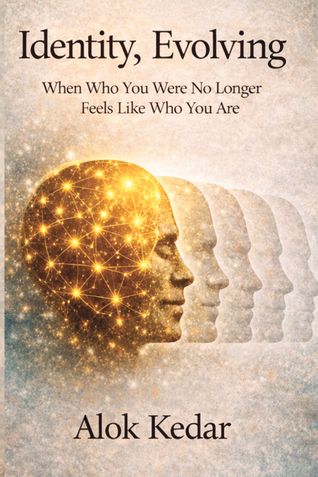
Description
There are moments in life when nothing appears to have changed, yet everything feels different.
The roles that once defined us begin to feel distant. The path that once felt clear no longer carries the same sense of meaning. Questions begin to surface, often without immediate answers.
Identity, Evolving explores these moments of transition, where identity is no longer fixed and the future has not yet taken shape.
This is not a guide to becoming someone new. It is a reflection on what happens when who you were no longer feels like who you are.
Drawing on lived experience and observation, the book examines how identity forms, becomes reinforced, and begins to shift through changing environments, roles, and perspectives.
It offers a way to understand the space between stability and change, where clarity has not yet arrived, but transformation has already begun.
About the Author
Book Details
Number of Pages: 115
Dimensions: 6"x9"
Interior Pages: B&W
Binding:
Paperback (Perfect Binding)
Availability:
In Stock (Print on Demand)
Ratings & Reviews
Identity, Evolving
Review This Book
Write your thoughts about this book.

Currently there are no reviews available for this book.
Be the first one to write a review for the book Identity, Evolving.
Other Books in Self-Improvement
Navin Kumar Selvaraj

Wilfred Stanley

Sunil Mangale