You can access the distribution details by navigating to My Print Books(POD) > Distribution
Add a Review


ஒரு சொம்பு தண்ணி
கணேஷ் கல்யாண்
अनकहे लम्हों की कहानी
रिद्धि पाठक
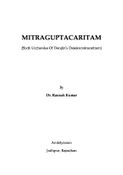
MITRAGUPTACARITAM
Dr. Raunak Kumar
सामर्थ्य (Saamarthya)
शशिप्रकाश सैनी (Shashiprakash Saini)
Type:
Print Book
Genre: Literature & Fiction, Philosophy
Language: English
Price:
₹249
This book ships within India only.
 Free Shipping
Description
It is perhaps for this reason that literature has remained humanity's most enduring witness. Literature has never seen human life lived without suffering, misery, and moral turmoil. Every individual has overcome it differently—some have reflected it differently, some have spoken of it differently, and some have written about it differently. From Valmiki to Homer, from Kālidāsa to Shakespeare, they all understood what it means to be human. Even though human life is momentary, some have made it immortal.
But for centuries, the Vālmīki Rāmāyaṇa has been flattened and toned down, reduced simply to the work of a religious poet or a historian—extreme views that have been rising for decades. This causes us to see him through our own moral lenses and political ideologies. But Vālmīki is much more than all of that: he does not dictate everything; he lets the tension linger.
That is why we go back to the age of Vālmīki—and through his eyes, we look at human dilemmas, desires, and contradictions. This work quietly sits under a tree; it does not announce itself, but quietly invites souls to discern the centuries of bias surrounding him.
About the Author
Book Details
ISBN: 9798903307463
Publisher: Celestial publisher
Number of Pages: 84
Dimensions: 5"x8"
Interior Pages: B&W
Binding:
Paperback (Perfect Binding)
Availability:
In Stock (Print on Demand)
Ratings & Reviews
On Reading Vālmīki
Review This Book
Write your thoughts about this book.
Currently there are no reviews available for this book.
Be the first one to write a review for the book On Reading Vālmīki.
Other Books in Literature & Fiction, Philosophy

கணேஷ் கல்யாண்

रिद्धि पाठक
Dr. Raunak Kumar

शशिप्रकाश सैनी (Shashiprakash Saini)