You can access the distribution details by navigating to My Print Books(POD) > Distribution
Add a Review
Type:
Print Book
Genre: Business & Economics, Education & Language
Language: English
Price:
₹345
+ shipping
Description
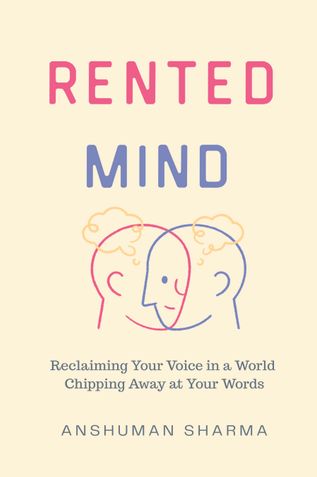
This book is about the art of expression, and about what happens when an entire civilization begins to lose it.
The art of expression comes with the struggle and resistance to find the right words and flow to express yourself, your ideas, your thought.
What happens when the resistance disappears? That is the question this book will try to answer.
Something is shifting beneath us. It is not loud. There is no alarm sounding. The shift feels, if anything, like relief, like being handed a better tool for a hard job. Artificial intelligence can now write our emails, draft our reports, structure our arguments, and generate our social media posts. It can compose wedding speeches and condolence letters. It can rephrase our half-formed thoughts into polished paragraphs in seconds. For many people, this is simply progress. The mental labor of communication, the searching, the struggling, the deleting and rewriting, has been lifted. The machine handles it now.
But here is what almost no one is talking about, that mental labor was not a bug. It was the training.
Every time you sat with a blank page and forced yourself to find the right word, not a good word, the right word, you were building something inside your mind. Every time you caught yourself midsentence and restructured your thought because you could see the listener's confusion, you were honing a cognitive skill that no app can replicate. Every time you failed to say what you meant and lay awake that night replaying the conversation, figuring out what you should have said, you were getting better. Slowly, imperfectly, painfully, but better.
That process has a name, though we rarely use it. It is called ‘cognitive load’. And cognitive load, in the domain of communication, is not an obstacle to be eliminated. It is the resistance that builds the muscle. Without resistance we will weaken our muscles of expression.
We will discuss this complex area in this book.
Not with panic, not with nostalgia for some imagined golden age of human conversation. I have no interest in arguing that we should throw away our tools. I am interested in something more precise and more urgent, understanding exactly what we are losing, mapping the mechanisms of that loss, and asking whether we can still do something about it before the loss becomes invisible, which is to say, before we forget we ever had the thing we are losing.
About the Author
Book Details
Publisher: ASP Books
Number of Pages: 119
Dimensions: 6"x9"
Interior Pages: B&W
Binding:
Paperback (Perfect Binding)
Availability:
In Stock (Print on Demand)
Ratings & Reviews
Rented Mind
Review This Book
Write your thoughts about this book.

Currently there are no reviews available for this book.
Be the first one to write a review for the book Rented Mind.
Other Books in Business & Economics, Education & Language

Nitin Waychal

Dr. Khushboo Gupta, Dr. Tripti Tiwari, Dr. Kalpana ...
Seyed E.zamani

Navneet Kumar Gupta, Navneet Kumar Gupta