You can access the distribution details by navigating to My Print Books(POD) > Distribution
Add a Review
Type:
Print Book
Genre: Religion & Spirituality
Language: English
Price:
₹199
+ shipping
Description
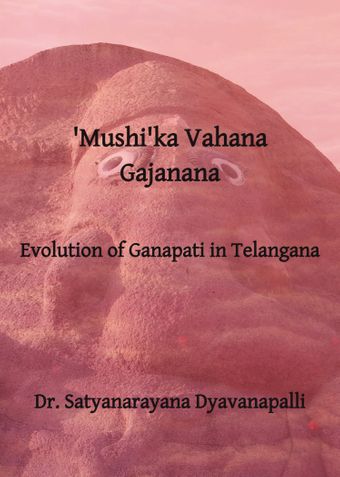
Earlier scholars such as Govind Das, D. P. Chattopadhyaya, Anita Raina Thapan, and R. L. Kashyap have identified South India as an important region in the early development of Ganapati. But a crucial question remains: where, specifically, did this evolution take place? This book proposes Telangana—particularly the Krishna River region along the Telangana–Andhra Pradesh frontier—as a significant early centre of Ganapati’s evolution. It brings together the earliest (2000 year old) literary references in Hāla’s Gāthā Saptasatī and Guṇāḍhya's Bṛhatkathā, earliest archaeological evidences from both banks of the Krishna River, including sculptures and inscriptions, and enduring folk traditions and folklore. It further traces the movement and diffusion of Ganapati from the Telugu-speaking region towards North India and other parts of the subcontinent, examining how the deity was subsequently adopted and incorporated into Buddhist and Jain religious traditions. By integrating nearly two millennia of literary, archaeological, epigraphic and traditional evidence, the book seeks to reconstruct the emergence, transformation and wider spread of Ganapati from the Telugu land.
About the Author
Book Details
Publisher: Suhrudi Publications, Hyderabad
Number of Pages: 96
Dimensions: 5"x7"
Interior Pages: B&W
Binding:
Paperback (Perfect Binding)
Availability:
In Stock (Print on Demand)
Ratings & Reviews
'Mushika Vahana Gajanana: Evolution of Ganapati in Telangana
Review This Book
Write your thoughts about this book.

Currently there are no reviews available for this book.
Be the first one to write a review for the book 'Mushika Vahana Gajanana: Evolution of Ganapati in Telangana.
Other Books in Religion & Spirituality

Chandan Gorain

B Mahadevan, Anuradha Sridharan

Dada Bhagwan
![Rajayoga Consummation [Kundalini] Karma-Jnana-Bhakti-Dhyana](https://simg.pothi.com/Z2_H0zpQApcNUWGDNM7pX6unUJPeL9aloAqJmgtT2Gg/rs:fit/w:130/h:175/el:1/g:sm/cb:rev-5/bG9jYWw6Ly8vaW1h/Z2VzL3Byb2R1Y3Rz/LzIwMjYvMDEvZWJv/b2s3NTQwL0ltYWdl/XzAuanBn.jpg)
Vibhakar Vitthal Lele [Swami Yogeshwarananda]