You can access the distribution details by navigating to My Print Books(POD) > Distribution
Add a Review
Type:
Print Book
Genre: Social Science, Politics & Society
Language: English
Price:
₹531
+ shipping
This book ships within India only.
Description
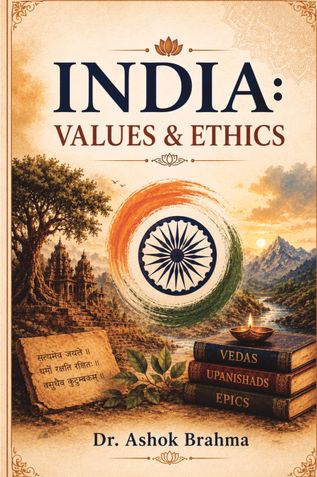
The study of values and ethical principles is fundamental to understanding the moral fabric of society. India's diverse philosophical traditions have produced a rich ethical heritage that continues to shape its cultural and social life. This book explores the core principles of Indian ethical thought, drawing on its enduring philosophical traditions to examine their relevance in contemporary society. This book seeks to promote a deeper understanding of India's moral heritage while encouraging critical reflection on the application of ethical values in everyday life.
It delves into the classical philosophical schools of India that have laid the groundwork for the country’s rich ethical traditions. Indian philosophy encompasses a range of schools, including Nyaya, Vaisheshika, Samkhya, Yoga, Mimamsa, and Vedanta, each contributing its unique perspectives on morality, the self, and the nature of the universe. Despite their differences, these schools share common themes, such as the importance of self-realization and liberation (Moksa) in moral reasoning. In this unit, we also examine the ethical foundations in the Vedas, Upanishads, and epics like the Ramayana, Mahabharata, and Bhagavad Gita. These ancient texts provide profound moral teachings on duty (Dharma), self-realization, and the pursuit of universal truth, addressing ethical dilemmas through powerful stories and metaphysical reflections. Furthermore, a comparison of Indian and Western ethical traditions reveals significant differences in their approaches to morality, focusing on duty (Dharma) in Indian thought versus individual rights or happiness in Western philosophies like Utilitarianism, Kantian ethics, and Virtue ethics.
The principle of Ahimsa (non-violence) is a cornerstone of Indian ethical thought, particularly in Jainism, Buddhism, and Gandhi’s philosophy. Jainism advocates for absolute non-violence, with teachings like Anekantavada and Parigraha offering an ethical framework that emphasizes the need to minimize harm in all forms of life. Buddhism’s Middle Path similarly emphasizes compassion and avoidance of harm, where the practice of Karuna (compassion) and Metta (loving-kindness) forms the ethical foundation for personal and societal conduct. This unit also examines Mahatma Gandhi’s interpretation of Ahimsa, which he integrated with Satyagraha (truth-force) as a potent tool for political and social change. Gandhi’s commitment to non-violence was deeply influenced by both Jain and Hindu traditions, and it remains a powerful ideal in modern civil rights movements.
In the republican ideals embedded within Buddhist ethics. The core ethical teachings of Buddhism, including the Four Noble Truths and the Eightfold Path, emphasize compassion, mindfulness, and ethical discipline (Sila) as central elements of moral living. The early Buddhist community, the Sangha, exemplified democratic practices, with an emphasis on consensus, equality, and communal discipline. This unit also looks at the role of governance as exemplified in Emperor Asoka’s edicts, which reflect the Buddhist principles of moral leadership, tolerance, and welfare.
The concept of Dharma, a fundamental aspect of Hindu ethical philosophy. Dharma encompasses a moral law and personal duty, varying according to one’s social role (Varnashrama) and life stage. The teachings from the Mahabharata and Bhagavad Gita offer profound reflections on the ethical dilemmas individuals face in fulfilling their duties. The relationship between Dharma, Karma, and Moksa underscores the interconnectedness of action, duty, and spiritual liberation in Hindu thought. This unit also explores how the concept of Dharma has evolved in modern India, particularly in the context of the Indian Constitution, professional ethics, and public service.
This book presents a comprehensive understanding of India's ethical traditions, combining philosophical insights with their practical relevance in contemporary society. By exploring these enduring value systems, the book seeks to foster a deeper appreciation of Indian culture, morality, and the continuing significance of ethical principles in addressing the challenges of the modern world.
About the Author
Book Details
ISBN: 9789361234460
Publisher: Dr. Ashok Brahma
Number of Pages: 302
Dimensions: 6"x9"
Interior Pages: B&W
Binding:
Paperback (Perfect Binding)
Availability:
In Stock (Print on Demand)
Ratings & Reviews
India: Values & Ethics
Review This Book
Write your thoughts about this book.

Currently there are no reviews available for this book.
Be the first one to write a review for the book India: Values & Ethics.
Other Books in Social Science, Politics & Society

Shreenivas Joshi

PIYUSH

C. P. Kumar

TAICT