You can access the distribution details by navigating to My Print Books(POD) > Distribution
Add a Review
This book ships within India only.
Description
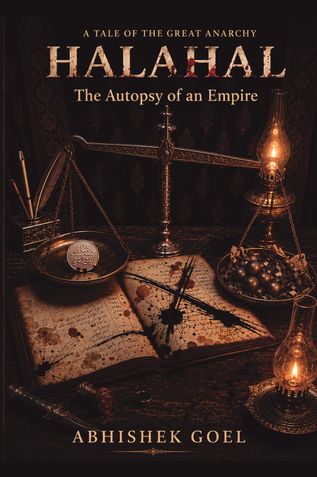
In 1658, a piece of news changed the course of the Mughal Empire.
Shah Jahan was seriously ill. Because of the tradition of Mughak Ta takt YA takta the struggle begins over the greatest throne in the Indian subcontinent. What began as a succession contest soon became something far larger—a prolonged churning of power, wealth, ambition and political loyalty that would continue long after the war for the throne was decided.
Aurangzeb emerged victorious. But victory did not end the underlying forces that had been unleashed. It leads to the series of events wher e the Indian Subcontinent goes into a prolonged spiral of infighting and revolts. The Mughal Empire looses it wealth. The mechanisms that held it together were increasingly under pressure.
What followed was not a simple story of an empire suddenly collapsing. It was a prolonged struggle in which princes, nobles, regional powers, warriors, merchants and foreign trading companies pursued their own interests as imperial authority weakened.
Marathas, Sikhs, Rajputs, Afghans and numerous regional powers became increasingly important players. European trading companies gradually transformed themselves from commercial actors into political and military powers. Wealth that had once sustained the empire increasingly became an incentive for others to fight over it.
Halahal takes its name from the deadly poison that emerged when the ocean was churned in the ancient story of Samudra Manthan.
The metaphor captures the central idea of this book. The Indian subcontinent underwent its own great churning. The process began with the princes fighting over the Mughal throne and continued through decades of wars, alliances, betrayals, economic pressures and political fragmentation.
And just as the poison of Samudra Manthan emerged from the churning, the poison of this political struggle spread across the subcontinent.
This book explores that churning—not simply through the actions of kings and generals, but through the incentives, resources, ambitions and decisions that drove them.
It is an attempt to look at this turbulent period without reducing it to a simple contest between heroes and villains. The story begins in 1658. The consequences would continue for generations. The book convers first 50 years and its 1st in the series of 4 books that shall culminate in the total subjugation of the subcontinent.
About the Author
Book Details
Publisher: self Published
Number of Pages: 294
Dimensions: 5.98"x9.00"
Interior Pages: B&W
Binding:
Paperback (Perfect Binding)
Availability:
In Stock (Print on Demand)
Ratings & Reviews
Halahal: The Autopsy of an Empire
Review This Book
Write your thoughts about this book.

Currently there are no reviews available for this book.
Be the first one to write a review for the book Halahal: The Autopsy of an Empire.
Other Books in History
Ashok Tapase

NITIN SHARMA

Maraimalai Adigal
Anurag Mathur